WendelseShort breaks, reconsidered
The Hague, Netherlands

The Hague

Den Haag

Netherlands

Palaces, paintings, then the North Sea.

The Hague is more interesting than its administrative reputation suggests. Royal and political streets, Vermeer and Rembrandt, Indo-Dutch food and a tram ride to the North Sea make it unusually varied for a short break.

Don't try to make it behave like Amsterdam.

4 days is ideal for The Hague.

Food & Drink

Food & Drink

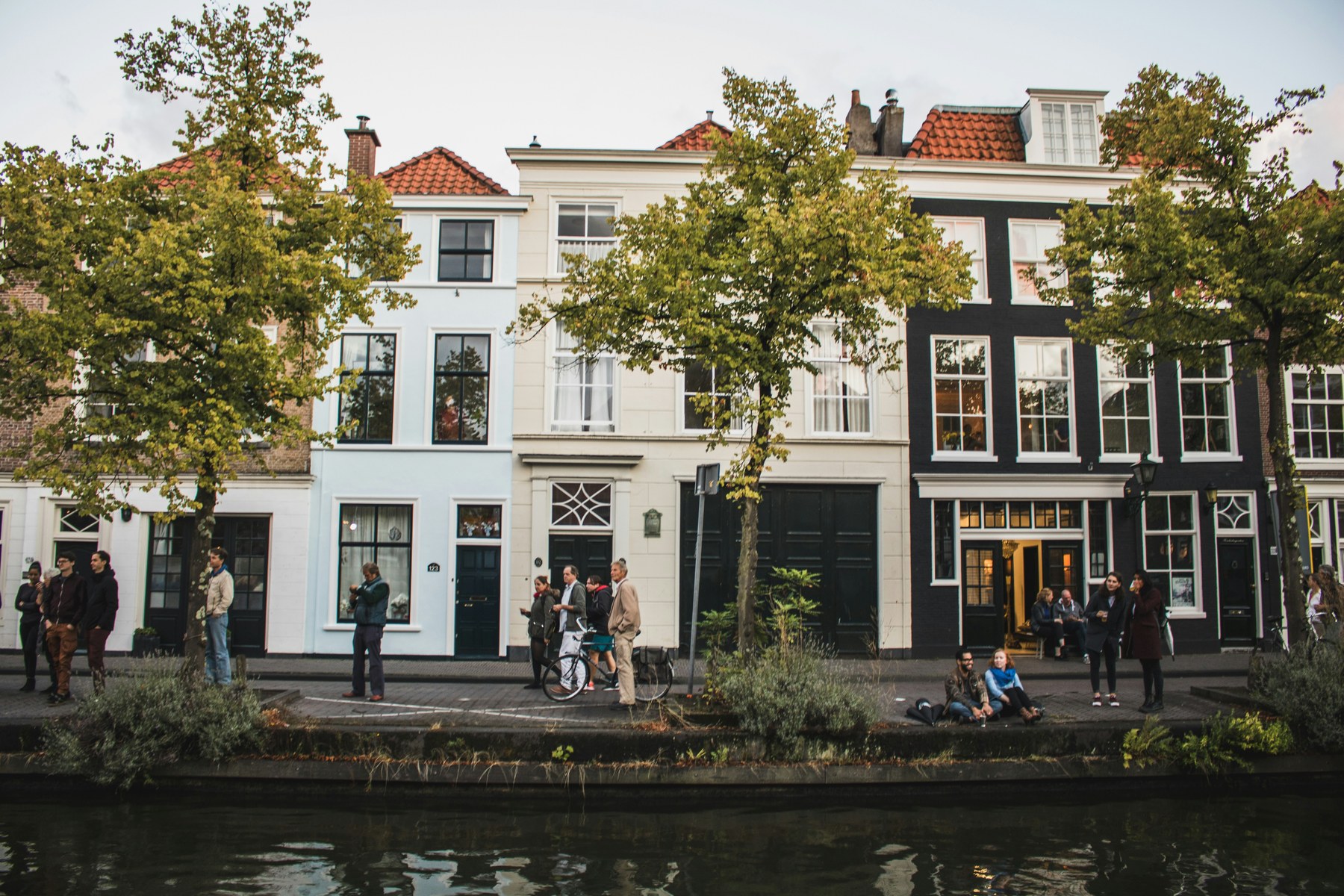
The Hague's food culture is unusually shaped by Dutch-Indonesian history rather than by Dutch food alone: a rijsttafel or toko lunch says more about the city than another herring stall, and it sits alongside a genuinely large, multicultural street market.

The Hague's food identity is unusually international for the Netherlands, with deep Indonesian influence from repatriated Dutch-Indonesian families after 1945, alongside North Sea fish, Dutch snack food and the city's own coffee-flavoured Haagse hopjes.

Must try

Indonesian rijsttafel

A spread of many small Indonesian dishes with rice, developed in Dutch colonial Indonesia and kept alive in The Hague by its large Indo-Dutch community.

Rijsttafel — literally 'rice table' — is a meal of many small dishes (curries, satay, vegetables, sambals) served together around a central pot of rice, a format created for Dutch colonial households in the Dutch East Indies rather than a traditional Indonesian way of eating. The Hague has the country's largest concentration of Indo-Dutch families, many of whom arrived after Indonesian independence in 1945–49, which is why the city's Indonesian food scene runs deeper than the usual Dutch high-street toko.

It is the clearest link between the city's food and its specific colonial and migration history, not a generic Asian-food detour.

Long-established Indonesian restaurants across the city, particularly around the centre.

Haagse hopjes

A coffee-flavoured caramel sweet said to be named after an 18th-century Hague family.

Haagse hopjes are hard, coffee-flavoured caramels, traditionally credited to the household of Hendrik Hop, an 18th-century diplomat, whose staff are said to have made a coffee-and-sugar sweet that later took his name. They are one of the few food items genuinely specific to The Hague rather than borrowed from wider Dutch food culture.

Traditional confectioners and department-store food halls in the centre.

Kibbeling

Bite-sized pieces of battered, deep-fried white fish, a North Sea coastal snack rather than a Hague invention.

Kibbeling is battered and fried chunks of white fish, usually cod or haddock, served in a paper tray with a garlic or tartare-style sauce. It began as a way of using cod cheeks and offcuts and is now a standard coastal snack; The Hague's proximity to the fishing harbour at Scheveningen makes it an easy, unpretentious thing to eat by the sea.

Fish stalls along the Scheveningen harbour and boulevard.

Haring

Raw, lightly salt-cured young herring, a Dutch snack rather than a Hague speciality, sold from carts across the city.

Hollandse Nieuwe herring is cured briefly rather than cooked and served with chopped onion and pickle, traditionally eaten by the tail or in a bread roll (broodje haring). It is a national tradition rather than something specific to The Hague, but fixed herring carts are common around the centre and Scheveningen.

Herring carts near the centre and along the Scheveningen boulevard.

Haagse Markt

One of Europe's largest street markets, in the Transvaal neighbourhood, reflecting the city's mixed population.

The Haagse Markt runs several days a week in the Transvaal district and is one of the largest open-air markets in Europe, with stalls selling Surinamese, Turkish, Moroccan, Indonesian and Dutch food side by side. It is a working neighbourhood market rather than a curated food experience, and gives an honest sense of the city's diversity that the historic centre alone does not.

It connects the destination's food identity to place, season and everyday shopping rather than restaurant menus alone.

Wendelse tip: Go on a market day and expect a working local crowd rather than a tourist-facing stall setup.

Transvaal neighbourhood, a short tram ride from the centre.
Good to know

  • Opening days and named businesses change: verify any business-level recommendation at trip time.

Art & Architecture

The government kept building around itself

The Hague does not give you one clean architectural moment. The Binnenhof began as a medieval court and remained a centre of government while buildings were repeatedly added, altered, demolished and repurposed around it. Later institutions moved beyond that historic core. The Peace Palace gave international law a deliberately monumental home. Modern ministries and government buildings changed the skyline again.

The interesting story isn't old versus new. It's how a city keeps finding architecture for institutions that refuse to stay the same size.

Don't missLook across water whenever you can. The Hague's institutional buildings often make more sense when you can see several generations at once.

Wendelse tipThe Binnenhof is undergoing a major renovation. Treat the restricted access as a practical constraint, not a reason to skip the area—the Hofvijver side still gives you the essential relationship between complex, water and city.

Must see

Binnenhof and Hofvijver

Start outside.

The Binnenhof has accumulated roughly eight centuries of political use and architectural change. The Ridderzaal preserves the medieval court at its heart, but the complex around it continued adapting as occupants and institutions changed.

The Hofvijver gives you the distance needed to see that accumulation. From across the water, the complex doesn't read as one symmetrical palace. Roofs, towers and façades of different periods sit together because government kept needing more space and different kinds of space. The current renovation is simply the latest chapter in that pattern.

Look for: How difficult it is to identify one dominant façade. The complex grew rather than arriving fully formed.

Peace Palace

The Peace Palace is almost the opposite architectural proposition.

Instead of centuries of accumulation, it began with an international competition for a new institution. French architect Louis Cordonnier's winning design was subsequently simplified, producing a neo-Renaissance palace whose historic architectural language housed an explicitly modern international project.

That contradiction is worth enjoying. The building looks backwards stylistically while representing institutions intended to manage relations between modern states. Notice the tower, the asymmetry and the deliberately ceremonial approach. This building wanted to look important from the beginning.

The newer government city

Don't search for one skyscraper to stand in for modern The Hague.

Walk around the area between the historic centre and the major government buildings closer to the central-station side and look at the collective change in scale.

The city becomes taller, larger and more infrastructural. Ministries occupy buildings whose relationship with the street is very different from the courtyards and waterside façades of the Binnenhof. The institutions are related. Their architecture no longer needs to look related.

Look closer

Water gives the buildings enough distance

The Hofvijver is valuable partly because it lets you stand back.

Without that distance, the Binnenhof can dissolve into entrances, construction boundaries, streets and individual façades. Across the water it becomes an accumulated skyline.

Use the same trick elsewhere in The Hague when canals or open spaces give large institutional buildings room to separate themselves from their surroundings.

Historic and modern scale collide quickly

The Hague can change architectural scale within a few streets.

A medieval hall, restrained brick façades, nineteenth- and early-twentieth-century institutional architecture and much taller modern buildings can all enter the same view.

Don't try to make them harmonious. The collision tells you something real about a city whose institutions kept expanding.

A suggested walk

Eight centuries of government architecture

Start with the Hofvijver rather than trying to force your way into the Binnenhof during renovation.

Look across the water and identify the Ridderzaal roofline within the larger complex. Then move through the surrounding centre towards the newer government quarter and central-station side.

Don't treat this as a route between attractions. Watch what happens to scale. Courtyards and historic façades give way to larger blocks and then to a much more vertical institutional city. The purpose of government architecture has remained surprisingly continuous. Its preferred shape has not.

Why Wendelse likes it

Getting around

Use the trams. Central sights are walkable, but the tram network is part of what makes The Hague easy — especially for Scheveningen and in poor weather. This is the opposite of Seville: public transport expands the useful city without making you miss its character.

Rhythm and pacing

Combine walking in the centre with tram-assisted jumps. Give art a proper block, then change environment completely by going to the coast.

Don't overdo it

Don't spend the whole trip comparing it with Amsterdam. There's no need to treat Scheveningen as an optional suburb if the weather makes the coast appealing.

Season and timing

North Sea weather changes the value of Scheveningen. Binnenhof access is date-sensitive because of renovation works.

Birmingham · 6–9 November · 4 days

A suggested shape for your days.

Built around your dates and what you said you're in the mood for. The journey itself isn't checked until you choose dates in Results.

Friday · 6 November

Arrive & settle in

Arrival day

Afternoon
  • Arrive and check in.
  • Royal centre, Hofvijver & Passage — Walk Noordeinde, Lange Voorhout, Hofvijver and the covered Passage to understand The Hague's formal and intimate architecture.

Nothing else planned. That's deliberate.

Saturday · 7 November

Your big exploring day

Weekend

Afternoon
  • Scheveningen by tram — Take the tram from the centre to the North Sea for beach, pier and a change of scale without sacrificing the no-car premise.
Evening
  • Indonesian rijsttafel or toko dinner — Use The Hague's unusually deep Indo-Dutch food culture as a defining evening rather than an optional extra.

Leave gaps between plans — nothing here needs rushing.

Sunday · 8 November

Take The Hague at your own pace

Weekend

Morning
  • Mauritshuis — Spend a focused visit with Vermeer, Rembrandt, Fabritius and the Dutch Golden Age in a small museum beside the Hofvijver.
  • Peace Palace visitor centre / tour — See the building that anchors The Hague's identity as an international city of peace and justice; book a guided interior tour when available.

Nothing else planned. That's deliberate.

Monday · 9 November

One last morning

Departure day

Morning
  • Breakfast, then a last walk through town.
Afternoon
  • Lunch, then the journey home.

Leave gaps between plans — nothing here needs rushing.

Prototype itinerary. Activity availability is illustrative, not live opening hours.

Don't miss

Even if it's not what you came for.

Food & Drink

Taste The Hague properly

The Hague's food identity is unusually international for the Netherlands, with deep Indonesian influence from repatriated Dutch-Indonesian families after 1945, alongside North Sea fish, Dutch snack food and the city's own coffee-flavoured Haagse hopjes.

  • Indonesian rijsttafel
  • Haagse hopjes
  • Haagse Markt
Explore Food & Drink →

Art & Architecture

What makes The Hague look like The Hague

Court, parliament and diplomacy shape The Hague: medieval Binnenhof fabric, royal streets, nineteenth-century passages and villas, Berlage modernism and the monumental Peace Palace form distinct layers.

  • Binnenhof
  • Mauritshuis
  • Peace Palace
Explore Art & Architecture →

Getting there

Choose your dates and we'll check real flights and the journey from Birmingham.

Check a journey for your dates →

Traveller fit

Is The Hague your kind of place?

Food
★★★★☆4 out of 5
History
★★★★☆4 out of 5
Architecture
★★★★★5 out of 5
Walkability
★★★★★5 out of 5
Outdoors
★★★★☆4 out of 5
Atmosphere
★★★★★5 out of 5

Things worth doing

A first day that works

Political/royal centre; Mauritshuis; lunch; neighbourhood wandering; relaxed evening.

If you have a second day

Tram to Scheveningen; beach/promenade; return for Indo-Dutch food or another district.

An extra day, or bad weather

If you stay longer, that time can support more art, Delft as a separate excursion, or simply more of The Hague's neighbourhoods.

Where to stay

Stay in the centre or around Denneweg/Noordeinde

Best for first-time visitors

The centre keeps Mauritshuis, royal streets and restaurants on foot; trams make Scheveningen and Kunstmuseum straightforward.

Ready to make it a trip?

The Hague

4 days · Architecture · Culture · Food · Walkable · Coast

Prototype placeholders — nothing is connected to a booking service yet.

← Back to your Wendelse