WendelseShort breaks, reconsidered
San Sebastián, Spain

San Sebastián

Donostia

Spain

A bay you can walk, and eat your way around.

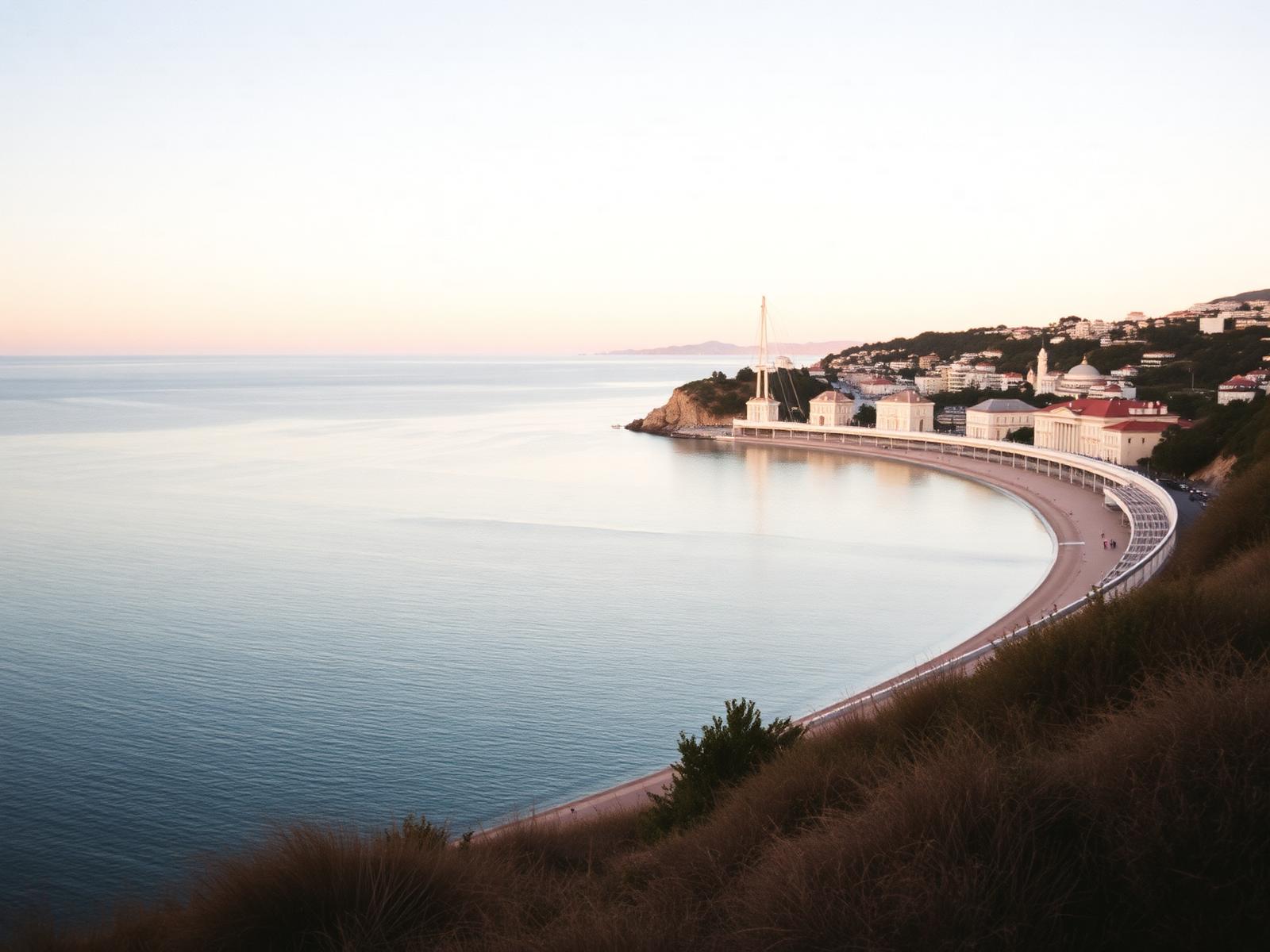
San Sebastián is a coastal city that behaves like a small one. The bay is enclosed almost to a circle, the centre is flat, and the whole seafront can be walked end to end before lunch without it feeling like an outing.

Its food reputation is real, but it is easy to misread. The point is not the famous restaurants — it is the pintxo bar: one thing, one small drink, standing, then somewhere else. An evening is four bars, not one table, and nothing needs booking.

The Basque and Spanish names are used side by side here. The language, the eating culture and the year-round use of the beaches are what stop this feeling like a resort.

4 days works well in San Sebastián.
Food & Drink

Eating in San Sebastián

In most cities food is something you stop and sit down for. In San Sebastián it is how the evening moves. The pintxo bar is a standing, sociable, deliberately short visit: one or two things, one small drink, then out and on to the next place. Understanding that rhythm changes the trip more than any single meal does. Pintxos are Basque rather than Spanish tapas: the word comes from the skewer that once held them together, and the form belongs to this coast.

Must tryA Gilda — the olive, anchovy and guindilla pepper skewer that started here.

Wendelse tipOrder one thing per bar. Two people, three or four bars, and you have eaten better than any single booked dinner would have managed.

Must try

Gilda

A skewer of green olive, salt-cured anchovy and pickled guindilla pepper.

The Gilda is San Sebastián's own invention and the oldest recognisable pintxo — salt, acid and heat in one mouthful, designed to be eaten standing with a drink in the other hand.

In one go, off the skewer, before anything else.

Try it with: Txakoli, or a small beer — a zurito.

Kokotxas

The small, gelatinous throat cut of hake, usually cooked pil-pil style.

Kokotxas are one of the clearest markers of Basque cooking: an unfashionable cut treated with enormous technique, emulsified slowly in oil and garlic until the sauce thickens on its own.

Something you might not know: The pil-pil sauce contains no cream or flour — it is gelatine from the fish emulsified with olive oil by movement alone.

Bacalao

Salt cod, most often served al pil-pil or a la vizcaína.

Salt cod is the backbone of Basque cooking, a legacy of long-distance Atlantic fishing rather than of local fresh catch, and the two classic preparations are worth trying side by side.

Al pil-pil is pale, garlicky and glossy; a la vizcaína is a deep red sauce built on dried choricero peppers, not on tomato.

Txuleta

A thick, aged bone-in beef chop, grilled over embers and sliced to share.

The txuleta is the one dish that justifies sitting down. It is ordered for the table, cooked hard on the outside and rare within, and served plainly — the beef and the fire are the whole point.

Shared between two or more, salted at the table, eaten in the order it is cut.

Anchovies

Either salt-cured (anchoas) or marinated in vinegar (boquerones).

The Cantabrian anchovy is a regional product of real seriousness, and the difference between the cured and the marinated version is the most useful thing you can learn at a pintxo counter.

Try it with: Txakoli — the acidity is built for it.

Idiazabal

A firm, sometimes lightly smoked sheep's-milk cheese from the Basque hills.

Idiazabal is the region's protected cheese and shows the other side of Basque food — inland, pastoral, and nothing to do with the sea.

Try it with: Quince paste, walnuts, or a glass of local cider.

What to drink

Txakoli

A low-alcohol, high-acid, slightly sparkling Basque white wine.

Txakoli exists to be drunk alongside pintxos rather than contemplated. It is poured from a height into a wide glass to open it up, and served in small measures because it is meant to be finished quickly and repeated elsewhere.

The pour itself — the long drop from bottle to glass is functional, not theatre.

Basque cider (sagardoa)

Dry, still, sharply acidic cider from the valleys just inland.

Basque cider is nothing like a sweet commercial cider: it is bone dry and deliberately unfiltered in character, and in the cider houses it is poured in short measures straight from the barrel.

Cider houses concentrated in the villages inland from the city, particularly around Astigarraga.

Rioja Alavesa

Rioja from the Basque side of the Ebro, widely poured in the city.

A reminder that the Basque Country has its own stake in Rioja — useful when you want red wine with a txuleta rather than another glass of txakoli.

Authentic experiences

A txikiteo — moving between bars

The local habit of bar-hopping in a small group, one drink and one pintxo at a time.

Each bar is good at two or three things. Staying put means eating the weakest thing on a counter you already know; moving on means eating only the best of each.

Start early, before the streets fill. Take one pintxo and one small drink per bar, pay before you leave, and move on rather than settling in.

From around eight in the evening, earlier at weekends if you want space.

Ordering from the kitchen, not the counter

The pintxos on the bar are only half the offer; the better ones are cooked to order.

This is the single change that most improves a first visit — the display is the shop window, not the menu.

Look for a short handwritten or chalked list behind the bar and order from that. Cold pintxos sit out; hot ones are made when you ask.

A market morning

The city's covered markets, where the counters explain what you ate the night before.

Seeing the fish, the peppers, the cheese and the cured anchovies laid out makes the pintxo counters legible rather than decorative.

La Bretxa, at the edge of the old town, and the Mercado de San Martín in the Centro district.

Morning, and best on a weekday.

A cider house meal

A fixed, traditional sequence eaten at long shared tables with cider straight from the barrel.

The cider-house meal is a seasonal Basque institution rather than a restaurant format, and the order of the food — cod omelette, cod with peppers, txuleta, cheese with quince and walnuts — is close to fixed.

The cider-house villages inland from the city, reached by local transport.

Booking required

Sitting down once

One proper meal in three or four days, chosen deliberately.

San Sebastián rewards eating little and often. Booking every night removes the part of the trip that makes it distinctive.

Reserve a single table — for a txuleta, for grilled fish, or for one of the city's tasting kitchens — and leave every other meal unplanned.

Where to experience it

Parte Vieja

The old town, and the densest concentration of pintxo bars in the city.

This is where a first evening belongs: the streets are short, the bars are close enough to walk between in seconds, and standing outside with a glass is normal.

Busy bars with a crowd spilling into the street — a good sign, not a warning.

Gros

The neighbourhood across the river, behind Zurriola beach, with a younger bar scene.

Gros is where the city eats when it isn't showing the city off. The bars are more spread out and the crowd is more local, which changes the pace of an evening entirely.

Centro

The nineteenth-century grid between the old town and the beach.

Wider streets, more sitting down, and the second of the city's markets. A useful contrast when the old town is at its busiest.

A first evening

Enough structure to avoid the worst mistake, and no more.

Around 19:30
Start in the old town while there is still room at the bars.
Bar one
A Gilda and a txakoli, standing. Pay and move.
Bar two
Order something hot from the list behind the bar.
Bar three
Anchovies or cheese, and a change of street.
Later
Cross to Gros if you want the evening to slow down and lengthen.

Three or four bars is a full evening. Five is ambitious.

If you have one full food day

Morning
A market, then coffee somewhere in the Centro grid.
Midday
A short pintxo lunch rather than a long one — the evening is the event.
Afternoon
Walk the bay to reset. Nothing booked.
Evening
A txikiteo through the old town, ending wherever it ends.

If you want one serious meal

Choose the day
Book the middle day of the trip, not the first or last.
Choose the format
A grill for txuleta or fish, or a tasting kitchen — the two are very different evenings.
Eat lightly beforehand
One pintxo at most, hours earlier.

The city's best-known restaurants are booked a long way ahead; the trip should not depend on getting a table.

Local tips

  • Pay at the end of each bar, not each round — say what you had, honestly, and it will be added up.
  • A zurito is a small beer, and a small pour of anything is the point: you are drinking across several bars, not at one.
  • Standing is normal. A free stretch of counter is more useful than a table.
  • Sunday evening and Monday are quieter across the whole food scene; plan the big evening earlier in the week.
  • Eating a little before nine feels early to locals and buys you space at the counter.

Good to know

  • Prices, opening hours and availability change constantly and are not listed here.
  • Cider-house season is traditionally the first months of the year, though the format is available more widely — check locally rather than assuming.
  • The best-regarded restaurants require reservations well in advance and are not the reason this guide exists.

Outdoors

The coast, on foot

San Sebastián's outdoors is not a day trip. It is the city: a bay closed at both ends by a green headland, an island in the middle, a promenade that runs the length of the sand, and a second, wilder beach on the other side of the river. Almost all of it can be walked from wherever you are staying, which means the outdoor part of the trip doesn't need to be planned — it just needs to be left room for.

Don't missThe full curve of La Concha, walked from one headland to the other.

Wendelse tipWalk the bay twice — once in the morning when it belongs to swimmers and runners, and once at dusk when it belongs to everyone else. They are different places.

Best experiences

The bay walk: Monte Urgull to the Peine del Viento

The continuous seafront walk from the old town, along La Concha and Ondarreta, to the sculptures at the western end.

This is the single walk that explains the city's shape. The promenade railing, the bay, the island and the two hills are all one composition, and walking it in order makes the geography obvious.

The white railing of the Concha promenade — a piece of city furniture that has become the city's emblem.

Early morning, or the hour before sunset.

Monte Urgull

The wooded hill behind the old town, topped by the Castillo de la Mota and a statue of Christ.

Urgull is where the city's defensive history and its outdoors are the same thing: shaded paths wind up through old fortifications to a summit that looks down on the harbour, the old town and the whole bay.

The gun batteries and walls along the way — this was a fortified hill long before it was a park.

Monte Igueldo

The headland at the western end of the bay, reached by a historic funicular.

Igueldo gives the postcard view — the whole bay, the island and Urgull opposite — and the funicular that climbs it has been running since the early twentieth century, alongside a small, old-fashioned amusement park at the top.

Take the funicular up and, if you want the walk, come down on foot.

Zurriola and the surf

The open, Atlantic-facing beach in Gros, and the city's surfing centre.

Zurriola is the counterweight to La Concha: exposed, wave-driven and used year-round by surfers. Watching it from the promenade is as much a part of the city as swimming in the sheltered bay.

How different the water is either side of the river mouth — one sheltered bay, one open ocean beach, a few minutes apart.

Isla Santa Clara

The small island in the middle of the bay, served by boat in season.

Standing on the island puts the city at arm's length and shows how completely the bay is enclosed — the reason the water here is so calm.

Seasonal; boats do not run year-round.

Walks

Paseo Nuevo, around Urgull

The sea-level path that loops around the base of Monte Urgull, between the old town and open water.

It is the one walk where you are properly exposed to the Cantabrian sea rather than looking at a sheltered bay — on a rough day the water comes over the wall.

Along the Urumea

The river walk between the bridges, linking the centre to Gros.

A quieter, more everyday walk than the seafront, and the easiest way to move between the two halves of the city without retracing the promenade.

Onto the coastal paths

The waymarked coastal walking that continues beyond the city in both directions.

San Sebastián sits on a long-distance coastal route, so a serious half-day walk starts at the edge of the city rather than requiring a car.

Check the route locally before setting out, and plan the return by local transport rather than walking both ways.

Parks and nature

La Concha and Ondarreta

The two connected beaches inside the bay, sheltered and shallow-shelving.

These are city beaches in the fullest sense — used before work, at lunchtime and after it, well outside the summer months.

How far the tide moves the shoreline; the beach changes size through the day.

The gardens of Miramar

The lawns and terraces on the rise between the two beaches, around the former royal residence.

It is the natural pause point halfway along the bay walk, and the best place to see why the nineteenth-century court chose this stretch of coast.

Viewpoints

The summit of Monte Urgull

Looking down on the harbour, the old town roofs and the length of the bay.

Late afternoon, with the light coming from the west.

Monte Igueldo

The classic view back along the bay to Urgull.

The Peine del Viento

Eduardo Chillida's steel sculptures anchored into the rocks at the far western end of the shoreline.

The work is designed around weather: the sea, the wind and the blowholes in the terrace are part of it, so it is a completely different experience on a calm day and a rough one.

A windy day, deliberately.

A half day outdoors

Start
The old town harbour, then up through Monte Urgull to the summit.
Down
Back to sea level and onto the Concha promenade.
Finish
Walk the full bay to the Peine del Viento and stop there.

Do this in the morning and the rest of the day can stay empty.

A full outdoor day

Morning
The bay walk, end to end, before the promenade fills.
Midday
Funicular up Monte Igueldo for the view back across the water.
Afternoon
Cross to Gros and Zurriola — swim, watch the surf, or just sit.
Evening
Paseo Nuevo at dusk, then into the old town for pintxos.

If the weather turns

Go anyway
The Paseo Nuevo and the Peine del Viento are better in rough weather, within reason.
Change the walk
Urgull's paths are sheltered by trees when the seafront is not.
Keep it short
Weather here moves quickly; a two-hour gap is usually enough.

Local tips

  • The bay is swimmable well beyond high summer; locals use it in all but the coldest months.
  • Check the tide before planning a beach walk — at high water the sand largely disappears in places.
  • Urgull and Igueldo are the only real climbs in the city; everything else is flat.
  • Zurriola is for waves, La Concha is for calm water. Choose by what you actually want to do.
  • Rain arrives and leaves quickly on this coast. Carry a jacket, not a plan B.

If the weather turns

  • The sheltered woodland paths of Monte Urgull instead of the exposed seafront.
  • The covered markets and the old town's short, tightly packed streets.
  • The aquarium at the harbour, which is genuinely about this coast's marine life.

Good to know

  • No distances, walking times, opening hours or ticket prices are given here — check locally, they change.
  • Boats to Isla Santa Clara and some funicular and beach services are seasonal.
  • Sea conditions can close the Paseo Nuevo; barriers are there for a reason.

Why Wendelse likes it

Food you don't have to book

Pintxo bars turn eating into the shape of the evening. You can eat exceptionally well here having planned nothing at all.

The coast is the city

Two beaches, a promenade around the whole bay and two climbable headlands, all reachable on foot from the centre.

Flat, and genuinely compact

You will not need transport. The only climbs in the city are the two hills, and both are optional.

Basque, not generically Spanish

Its own language, its own food culture and its own social habits — close enough to reach easily, different enough to be worth the trip.

Birmingham · 6–9 November · 4 days

A suggested shape for your days.

Built around your dates and what you said you're in the mood for. The journey itself isn't checked until you choose dates in Results.

Friday · 6 November

Arrive & settle in

Arrival day

Afternoon
  • Arrive and check in.
  • Walk the bay: La Concha to the Peine del Viento — The full seafront promenade, from below Monte Urgull along La Concha and Ondarreta to Chillida's sculptures on the rocks.

Nothing else planned. That's deliberate.

Saturday · 7 November

Your big exploring day

Weekend

Afternoon
  • Climb Monte Urgull — Shaded paths up through old fortifications to the Castillo de la Mota, with the harbour, the old town and the whole bay below.
Evening
  • Pintxo bars of the Parte Vieja — Move between the old town bars the way the city does — one pintxo and one small drink at each, standing, then on to the next.

Leave gaps between plans — nothing here needs rushing.

Sunday · 8 November

Take San Sebastián at your own pace

Weekend

Morning
  • Belle Époque San Sebastián on foot — The nineteenth-century city between the old town and the beach: the grid, the bridges, the Buen Pastor cathedral and Moneo's Kursaal at the river mouth.
Afternoon
  • Zurriola beach and Gros — Cross the river to the open Atlantic beach and the neighbourhood behind it, where the surf and the bars are both more local.

Nothing else planned. That's deliberate.

Monday · 9 November

One last morning

Departure day

Morning
  • Breakfast, then a last walk through town.
  • Monte Igueldo funicular — Ride the century-old funicular to the headland at the western end of the bay for the view back across the water.
Afternoon
  • Lunch, then the journey home.

Leave gaps between plans — nothing here needs rushing.

Prototype itinerary. Activity availability is illustrative, not live opening hours.

Don't miss

Even if it's not what you came for.

Food & Drink

Eating here is a way of moving, not a booking

Pintxo bars, txakoli, salt cod and one shared txuleta — San Sebastián's food is spread across a whole evening rather than a single table.

  • Gilda and txakoli
  • Bar-hopping in Parte Vieja
  • Market mornings
Explore Food & Drink →

Outdoors

The coast is the city, not an excursion

Two beaches, two green headlands and a promenade around the whole bay — all of it walkable from the centre.

  • Monte Urgull
  • La Concha promenade
  • Zurriola and the surf
Explore Outdoors →

Culture & Atmosphere

A Basque city, on its own terms

Euskara on the street signs, gastronomic societies behind closed doors, and a seafront the city uses all year rather than handing over to visitors.

  • Parte Vieja evenings
  • Gros
  • Basque language and identity

Getting there

Choose your dates and we'll check real flights and the journey from Birmingham.

Check a journey for your dates →

Traveller fit

Is San Sebastián your kind of place?

Food
★★★★★5 out of 5
History
★★★☆☆3 out of 5
Architecture
★★★★☆4 out of 5
Walkability
★★★★★5 out of 5
Outdoors
★★★★★5 out of 5
Atmosphere
★★★★★5 out of 5

Things worth doing

An evening across four bars

A Gilda and a txakoli, then something hot ordered from the list behind the bar, then somewhere else entirely.

The full bay walk

From the harbour below Monte Urgull to Chillida's Peine del Viento, on one level promenade.

Both headlands

Urgull on foot through its old fortifications, Igueldo by a funicular that has been running for over a century.

Where to stay

Stay in the old town or in Gros

Best for evenings on foot

The Parte Vieja puts you inside the bar streets; Gros is quieter, a minute from Zurriola beach, and still an easy walk from everything.

Ready to make it a trip?

San Sebastián

4 days · Food · Coast

Prototype placeholders — nothing is connected to a booking service yet.

← Back to your Wendelse