Regensburg
Germany
Two thousand years of history that still feels lived in.
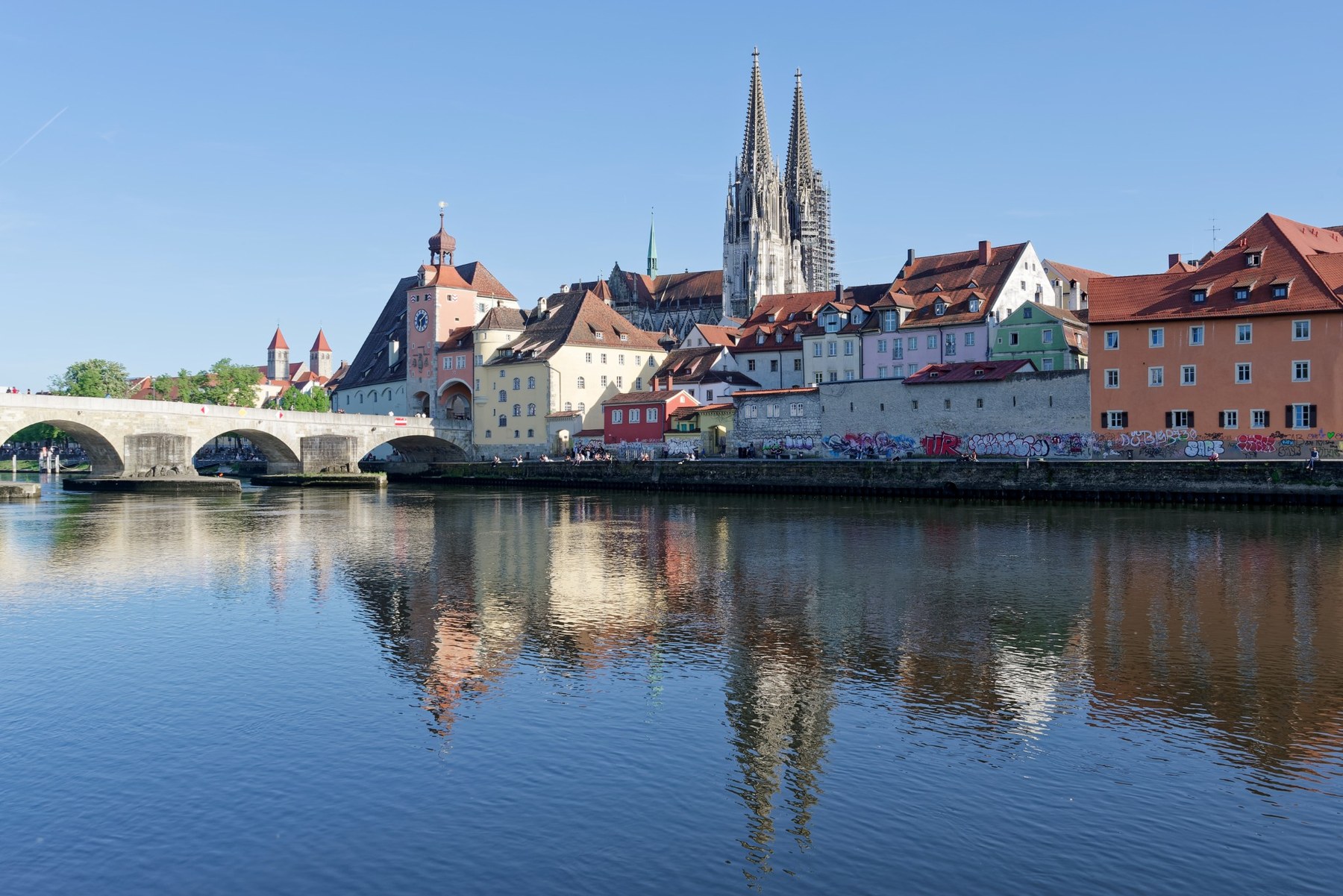
Regensburg has the kind of medieval centre that could easily turn into a sightseeing exercise. Don't let it. The cathedral, Stone Bridge, towers and old merchant houses matter, but so do the lanes, squares, Danube and places where people are simply having a beer.
Its history is unusually deep — Roman frontier, medieval trading powerhouse, Free Imperial City — yet the centre has survived with enough continuity that you can absorb much of it just by walking. Cross the Stone Bridge, look back at the skyline and keep going into Stadtamhof rather than immediately turning around.
4 days is ideal for Regensburg.
Why Wendelse likes it
The cathedral
St Peter's is French-style Gothic dropped into a Bavarian city, and the medieval glass is the part most people walk straight past — look up on the north side. Half an hour inside is usually enough. The lanes and small squares immediately around it carry just as much of the city, so don't march off to the next sight.
The Stone Bridge
Nearly nine hundred years old, and the reason Regensburg grew rich: for centuries it was the only fixed crossing of the Danube for miles, so the trade came through here. Walk out to the middle and turn back towards the towers. That is the view the city was built to be seen from.
Stadtamhof
Most visitors photograph it from the bridge and turn round. Keep going instead — the far bank is a small, quieter baroque town in its own right, twenty minutes end to end, with somewhere decent to eat and almost no crowds. It roughly doubles what the bridge is worth.
Roman Regensburg
The city began as Castra Regina, a legionary fort on the empire's northern frontier, and the Porta Praetoria gateway is still standing, built into a later house near the cathedral. It takes ten minutes to find and it changes how you read the whole street plan. The museum is only worth adding if Roman history is genuinely why you came.
Old Town Hall and imperial history
For almost 150 years, representatives from across the Holy Roman Empire met in this building to argue out the affairs of central Europe. Take the guided tour if that story interests you; otherwise the Old Town Hall is easy to appreciate from the square as part of a walk through the centre.
The Danube and a beer-garden evening
Riverside time here is part of the trip rather than what is left over from it. The old sausage kitchen by the bridge has been grilling over beech wood since the bridge builders ate there — join the queue if it is short, skip it if it isn't — and take a table by the water in the evening instead of hunting for a restaurant.
Birmingham · 6–9 November · 4 days
A suggested shape for your days.
Built around your dates and what you said you're in the mood for. The journey itself isn't checked until you choose dates in Results.
Friday · 6 November
Arrive & settle in
Arrival day
- Afternoon
- Arrive and check in.
- The cathedral and old town lanes — The Gothic anchor, and the squares and lanes that carry just as much of the city.
- Stadtamhof — Keep going past the far end of the bridge — most visitors turn round too early.
Nothing else planned. That's deliberate.
Saturday · 7 November
Your big exploring day
Weekend
- Morning
- The Roman layer — Porta Praetoria and the traces of the frontier fort, for travellers who came for history.
- Afternoon
- The Stone Bridge — Cross it properly and look back at the skyline from the middle.
- Time on the Danube — Unstructured river time — part of the trip rather than what's left over from it.
Leave gaps between plans — nothing here needs rushing.
Sunday · 8 November
Take Regensburg at your own pace
Weekend
- Morning
- Free exploration: the historic centre, the main square, a long lunch somewhere in Regensburg.
- Evening
- Sausage, inn and beer garden — One Bavarian evening by the river, without performing tradition at every meal.
Nothing else planned. That's deliberate.
Monday · 9 November
One last morning
Departure day
- Morning
- Breakfast, then a last walk through town.
- Afternoon
- Lunch, then the journey home.
Leave gaps between plans — nothing here needs rushing.
Prototype itinerary. Activity availability is illustrative, not live opening hours.
Getting there
Choose your dates and we'll check real flights and the journey from Birmingham.
Check a journey for your dates →Traveller fit
Is Regensburg your kind of place?
- Food
- ★★★★☆4 out of 5
- History
- ★★★★★5 out of 5
- Architecture
- ★★★★★5 out of 5
- Walkability
- ★★★★★5 out of 5
- Outdoors
- ★★★☆☆3 out of 5
- Atmosphere
- ★★★★★5 out of 5
Things worth doing
A first day that works
Cathedral and old town, then the Stone Bridge, then straight on into Stadtamhof and back along the Danube.
If you have a second day
The Roman or imperial layer depending on what interests you, then a deliberately unscheduled afternoon.
Extra time
The river, cafés, a beer garden, or an optional trip along the Danube.
Wendelse tip
Cross the Stone Bridge and keep walking.
Where to stay
Stay inside the old town
Best for history and easy evenings
The cathedral, bridge, lanes and riverfront are all within a few minutes of each other.
Ready to make it a trip?
Regensburg
4 days · History · Architecture · Walkable · Culture
Prototype placeholders — nothing is connected to a booking service yet.