Food & Drink
Parma takes eating seriously
Parmigiano Reggiano, Prosciutto di Parma and handmade pasta are part of the city's identity rather than simply things on a menu.
- Parmigiano Reggiano
- Tortelli d'erbetta
- Culatello di Zibello
Italy
The weekend you can eat.
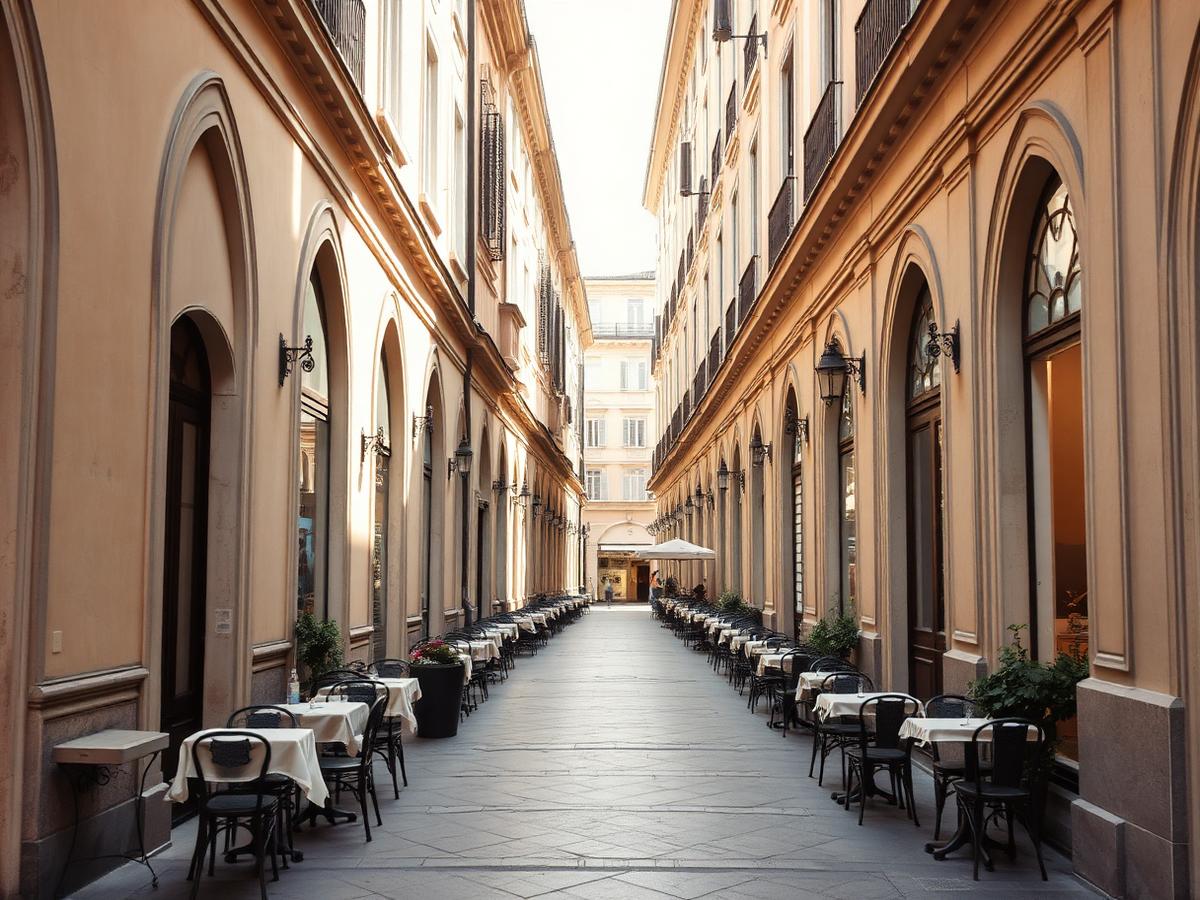
Elegant arcades, opera evenings and the most famous larder in Italy.
4 days is ideal for Parma.
Food & Drink
Parma doesn't just have a famous food scene. It has a very specific food culture, built around exceptional cured meats, Parmigiano Reggiano, handmade pasta and the wines of the surrounding hills. Knowing what to look for makes a weekend here considerably more rewarding.
Must tryParmigiano Reggiano at more than one age, and Culatello di Zibello alongside the more familiar Parma Ham.
Don't missA vertical tasting comparing different maturation periods of Parmigiano Reggiano.
Wendelse tipDon't just grate it over pasta. Taste it on its own.
Must try
A hard, granular cow's milk cheese made under protected designation rules in a defined area that includes the province of Parma.
Production is tightly regulated: raw milk, no additives, and a minimum maturation period, with wheels graded and marked before they can carry the name. The permitted area covers Parma, Reggio Emilia, Modena and parts of Bologna and Mantua, which is why the cheese and the city share a name.
It is the anchor of the region's cooking — grated over pasta, folded into fillings, and eaten on its own — and the reason many people come to Parma in the first place.
Ageing. Younger cheese (around 12–18 months) is milder, softer and more milky; older cheese (24, 30, 36 months and beyond) becomes drier, more crumbly and more intensely savoury, with visible crystalline texture.
In small broken pieces rather than slices, at room temperature, tasting youngest to oldest so you can follow how the flavour and texture change.
At a dairy (caseificio) in the province, or at a traditional salumeria or cheese counter in the city where you can ask for more than one maturation.
Dry-cured ham from the hills around Parma, made with only pork and salt and matured for a minimum period under protected designation rules.
The hill air of the Parma countryside has long been used for curing, and production remains concentrated there. No smoking, no nitrates in the traditional method — just salting, resting and time, which is why ageing is the main variable in the finished ham.
Its character is delicate and sweet rather than aggressively salty, which sets it apart from many other European dry-cured hams.
Thin, hand-sliced pieces, soft rather than dry, with the fat left on — the fat carries much of the flavour.
Served simply, without heavy sauces or complicated preparation, at room temperature so the texture softens.
A producer in the hills south of the city, or a salumeria that slices to order.
A cured meat from the misty Po lowlands north of Parma, made from the leanest inner muscle of the leg and matured in a casing.
Unlike Parma Ham, Culatello is boned, tightly bound and aged in the humid cellars of the lowland villages around Zibello. Production is small, the shape is distinctive, and it carries its own protected designation covering a short list of comuni in the province.
It is the province's most prized cured meat and a genuinely different experience from Parma Ham — deeper, more concentrated, more savoury.
Very thin slices with a deep colour and a soft, almost silky texture.
On its own or with bread, without butter or sauces getting in the way.
The Zibello area in the north of the province, or a Parma salumeria that stocks it.
Fresh filled pasta with a ricotta and herb filling — the dish most closely associated with Parma's home cooking.
The filling is ricotta with erbette (leafy chard-like greens) and Parmigiano Reggiano, wrapped in thin fresh egg pasta. Traditionally served simply, dressed with butter and more grated Parmigiano rather than a heavy sauce.
It is the local answer to filled pasta, distinct from the meat-filled traditions elsewhere in Emilia.
Fresh pasta filled with ricotta and herbs, traditionally served simply.
As a first course, in a trattoria that makes its pasta in-house.
Wendelse tip: This is the sort of dish to order when you want something that feels genuinely local rather than generically Italian.
Small filled pasta shapes traditionally served in broth, associated with Parma's festive and Sunday cooking.
The Parma filling is built around a slow-braised meat stew and its juices bound with breadcrumbs and Parmigiano Reggiano; recipes differ from household to household and from neighbouring provinces. They are cut small and round, and most often eaten in brodo rather than with a sauce.
Where tortelli are the everyday filled pasta, anolini are the celebratory one — a different filling, a smaller shape, and usually a bowl of broth instead of a plate.
A clear, well-made broth — it carries the dish.
In brodo, as a first course, with grated Parmigiano Reggiano alongside.
A pork salami named after Felino, a comune in the hills just south-west of Parma, with its own protected designation.
It is coarsely ground, lightly seasoned and cased in a slightly irregular, tapering shape, then matured in the hill air. The character is mild and sweetish rather than spicy or heavily smoked.
It rounds out the province's cured meats: alongside Prosciutto di Parma and Culatello, it shows how differently the same raw material is treated a few kilometres apart.
Slices cut on a slight diagonal, a little thicker than the ham.
As part of a mixed cured meat plate, with bread and a glass of local wine.
Wendelse tip: Don't overlook the cured meats beyond Parma Ham and Culatello.
Cheese
One cheese, several very different experiences, depending entirely on how long it has been aged.
Around 12–18 months the cheese is paler and softer, with a milky, almost yoghurt-like freshness. At 24 months the texture becomes drier and grainier and savoury notes take over. At 30–36 months and beyond it is markedly crumbly, with crunchy crystalline pockets and a long, concentrated, nutty finish.
Texture as much as flavour: how easily the piece breaks, and whether you can feel crystals.
At room temperature, in broken pieces, before anything else on the table.
Ask for two or three ages side by side rather than a single wedge — the comparison is the point.
What to drink
An aromatic white grape grown in the hills of the Parma and Piacenza area, made both still and sparkling, dry and off-dry.
It is the signature white of the Colli di Parma hills, and appears under the Colli di Parma denomination as well as in wines from neighbouring hill zones. Styles vary considerably by producer, from lightly frizzante and off-dry to fully dry and still.
It is the local alternative to defaulting to a familiar Italian white, and it is made in the same hills that cure the ham.
As an aperitivo, or alongside cured meats and fresh pasta at the start of a meal. Ask whether the bottle is dry or off-dry before ordering.
The sparkling red of Emilia — a family of grapes and appellations rather than a single wine.
Its heartland is around Modena and Reggio Emilia, with distinct denominations such as Lambrusco di Sorbara, Grasparossa di Castelvetro and Salamino di Santa Croce, each with its own colour, depth and structure. Bottles range from bone dry to noticeably sweet, so the label and the producer matter more than the name Lambrusco.
It is the regional wine most often served with Emilia's cured meats and rich pasta, and the one most often misjudged from a single bad bottle.
Lightly chilled, dry (secco) if you want it as a food wine, with salumi or a plate of filled pasta.
The denomination covering the hills immediately south of the city, including reds as well as Malvasia.
The zone produces a small volume compared with its neighbours, which means the wines are far easier to find in Parma than outside it.
Ask for a local bottle by the glass and let the restaurant choose the producer.
Something to ask for after dinner
A traditional Parma-area liqueur made by macerating wild blackthorn sloes in alcohol and wine with sugar and spices.
Small glass, after dinner, at room temperature.
A dark, bittersweet Emilian liqueur made from green walnuts picked while still unripe, then macerated with sugar and spices.
After a long meal, in a very small glass.
A rustic local speciality of the Parma area made from grape must, traditionally home-produced in the countryside.
Ask for it by name — it is more likely to appear outside the city centre.
Authentic experiences
A morning at a working caseificio in the province, seeing the milk arrive, the curd worked in copper vats, and the wheels resting in the ageing rooms.
You understand why ageing changes the cheese so much once you have stood in front of racks of wheels at different stages — and tasting there is far more instructive than buying a wedge at home.
2–3 hours including tasting · Early morning, when cheesemaking happens · Booking required
A visit to a curing house in the hills south of Parma, walking through the salting and resting rooms and finishing with hand-sliced ham.
It makes the role of air, salt and time concrete, and it is the easiest way to taste the ham at more than one age.
1.5–2 hours · Late morning · Booking required
A trip north into the Po lowlands around Zibello, where Culatello is bound by hand and aged in damp cellars.
Production is small and local, so this is the one product of the province that is genuinely easier to understand on the spot than anywhere else.
Half a day including travel · Autumn and winter, when the lowland mists are part of the story · Booking required
Working your way through the city's traditional food shops, asking for tastings and comparing what each counter recommends.
The salumeria is where Parma's food culture is actually practised day to day, and the people behind the counter will tell you more in ten minutes than any menu.
1–2 hours · Mid-morning, before lunch service
A guided walk through the centre linking shops, counters and a few tastings, with the products explained as you go.
It is the fastest way to get your bearings on the first day, and it makes the rest of the weekend's eating more deliberate.
2–3 hours · Morning · Booking required
Traditional food shops
Parma's food culture lives in its counters as much as its restaurants: cured meats sliced to order, cheese broken from the wheel, and staff who will happily tell you what is worth trying today. A shop visit is also the least expensive way to taste several products side by side.
Whole hams and wheels being cut in front of you, and a willingness to give you a small taste before you commit.
A long-standing Parma address for cured meats, given here as an editorial example rather than a recommendation with hours or availability.
La Prosciutteria di Silvano Romani
A traditional salumeria in the centre, listed as an example of the type of shop worth seeking out.
Antica Salumeria Alimentaria Rastelli
A food address beside the cathedral square, useful as an example of combining a tasting with a walk through the historic centre.
TGusto / Palazzo Dalla Rosa Prati
A central counter for cured meats and cheese, included as an editorial example.
Salumeria Garibaldi
A planning suggestion, not a fixed itinerary — move the parts around to suit your dates.
Nothing here is booked or timed. Availability and opening times are not part of this prototype.
Keep it flexible: one producer visit and one long lunch is enough structure for a weekend.
Local tips
Good to know
Art & Architecture
Parma is compact enough to explore on foot, but its centre contains an unusually rich concentration of Romanesque, Renaissance, Baroque and Neoclassical architecture.
The trick is knowing where to look — and, in some places, looking upwards.
Must tryStand beneath Correggio's dome in the Cathedral and look upwards.
Don't missThe sculptural detail around the Baptistery.
Wendelse tipParma's historic centre is compact enough that you should walk between the major sights rather than planning separate journeys.
Something you might missThe Camera di San Paolo — a small frescoed room away from the main squares that most short-break visitors never open the door to.
Must see
A Romanesque cathedral on Piazza Duomo, rebuilt after the earthquake of 1117 and crowned by an octagonal dome painted by Correggio.
The sandstone façade is arranged in tiers of loggias and galleries, the horizontal rhythm typical of Emilian Romanesque, with an entrance porch carried on stone lions. Inside, the character changes completely: the unusual octagonal dome was frescoed by Correggio in the 1520s with the Assumption of the Virgin, a swirling composition built on illusionistic perspective so that the architecture appears to open into sky.
The exterior and interior tell very different artistic stories — a restrained Romanesque shell around one of the most ambitious Renaissance ceiling paintings in Italy.
The octagonal drum is unusual for a cathedral of this period, and Correggio used its shape to make the figures spiral upwards rather than sit in tidy registers.
Look for: The lions supporting the entrance porch.
Must see: Correggio's dome.
Don't miss: The illusionistic perspective of the Assumption.
Antelami's Deposition relief, carved in 1178 and signed by the sculptor — one of the earliest signed works of Italian medieval sculpture.
Wendelse tip: Don't spend all your time looking at the façade. The real surprise is above you.
Romanesque, with later additions · 45–60 minutes · Morning, when the piazza is quiet and the interior light is even.
An octagonal baptistery in pink Verona marble, begun in 1196 under Benedetto Antelami, standing alongside the Cathedral on Piazza Duomo.
The building sits exactly on the hinge between Romanesque and Gothic: the mass and the tiered arcaded loggias belong to the older tradition, while the pointed portals and the vertical pull of the interior look forward. Antelami carved the doorways and much of the exterior sculpture himself, including the cycle of months and seasons, so the outside of the building is as much a sculptural programme as a wall.
It is the clearest place in the city to read one architectural language turning into another, and one of the few medieval buildings where the sculptor's own hand is documented throughout.
Look for: The relief panels beside each doorway, and the way the sixteen interior bays rise into a tall ribbed vault.
Must see: Antelami's carved portals.
Don't miss: The exterior sculptural cycle running around the base of the building.
Wendelse tip: Circle it slowly and stop at each portal instead of walking a lap. The detail is the point, and it rewards standing still.
Romanesque to Gothic transition · 30–45 minutes · Late morning, when raking light picks out the carving.
The vast unfinished palace complex built by the Farnese dukes, now holding several of Parma's major cultural institutions.
Begun in the late sixteenth century as the service and ceremonial wing of the Farnese court, the Pilotta was never completed, which is why it reads as a sequence of huge brick blocks rather than a single palace front. Today it houses the Teatro Farnese, the National Gallery, the Palatine Library and the Bodoni Museum, alongside the archaeological collection.
It is where Parma's political history and its cultural life sit in the same building: the Farnese ambition that shaped the city, still functioning as the centre of its museums.
Wendelse tip: You are not expected to see everything here. Choose one or two parts and give them proper attention.
Late Renaissance, Farnese · 1–3 hours, depending on how much you take on
A remarkable wooden theatre hidden inside the Pilotta complex.
Built in 1618 for the Farnese court inside an existing hall of the Pilotta, the theatre is constructed almost entirely of wood, painted to imitate marble, with a U-shaped tiered auditorium and one of the earliest permanent proscenium arches. It was severely damaged in the Second World War and reconstructed using the original design, so what you walk into is a faithful rebuilding of a very early theatre type.
It marks a turning point in how European theatres were designed, with a framed stage and a moveable scenery machine, and it survives at full scale rather than as a drawing.
Almost nothing here is stone. The columns, statues and architecture of the auditorium are timber and painted plaster, which is why the space feels warm and slightly unreal.
Look for: The painted wood imitating marble, and the depth of the stage behind the proscenium.
Must see: The wooden auditorium seen from the stage end.
Wendelse tip: This is the strongest single recommendation in the guide for a short break. Fifteen minutes inside is worth more than an hour spent hesitating outside museums.
Baroque, 1618 · 30 minutes
A small frescoed room in a former Benedictine convent, decorated by Correggio for the abbess Giovanna da Piacenza.
Correggio painted the vault as an illusionistic pergola: ribs of painted trellis open into oval windows through which putti lean into the room. It is an early, private-scale experiment with exactly the illusionism he later carried into the Cathedral dome.
For anyone interested in Renaissance painting, it shows the idea behind the Cathedral dome being worked out first, in a single quiet room.
Look for: The painted oval openings in the vault, and how the putti are foreshortened as if seen from below.
Something you might otherwise miss: The room is not on the main piazza circuit and is easy to walk past entirely — it needs a deliberate detour of a few minutes.
Renaissance, 1510s · 20–30 minutes
Parma's opera house, commissioned by Maria Luigia, Duchess of Parma, and built between 1821 and 1829.
The exterior is sober Neoclassical, with a colonnaded portico and a restrained façade; the interior opens into a horseshoe auditorium with tiers of boxes, gilding and a painted ceiling. It remains an active opera house and is closely tied to the city's reputation as an unusually demanding audience.
It explains something about Parma that the churches do not: a nineteenth-century ducal city deliberately building its cultural identity around opera.
The contrast between the plain portico outside and the decorated auditorium inside, and the tiered box structure typical of Italian theatres of the period.
Wendelse tip: Start your architecture walk here. It sets the Neoclassical baseline before you meet the Romanesque.
Neoclassical, 1821–1829 · 30–45 minutes · Booking required
A Benedictine church immediately behind the Cathedral, with a dome frescoed by Correggio.
The church was rebuilt around 1500 and given a Baroque façade a century later. Correggio painted the dome with the Vision of Saint John, working here before the Cathedral commission, and Parmigianino contributed decoration in the nave.
It is the natural third stop after the Cathedral and Baptistery — a few steps away, and it lets you compare two Correggio domes in the same half hour.
Look for: The dome fresco, and the Parmigianino work in the nave chapels.
Renaissance church, Baroque façade · 20–30 minutes
A sixteenth-century Renaissance church on a Greek-cross plan, close to the Teatro Regio.
The plan is a compact central cross with domed crossing, and the church holds decoration by Parmigianino on the arch above the presbytery. It later became associated with the Farnese and Bourbon rulers of Parma, several of whom are buried here.
Worth a short stop if you are already walking past, particularly for the Parmigianino decoration, rather than a destination in its own right.
Look for: Parmigianino's frescoed arch above the presbytery.
Renaissance, Greek-cross plan · 15 minutes
Look closer
The stone lions carrying the columns of the entrance porch, a standard Emilian Romanesque device — and the detail most visitors walk straight over.
The portal reliefs and the cycle of months, carved in pink Verona marble, are readable up close in a way that photographs flatten.
In both the Cathedral dome and San Giovanni Evangelista, figures are painted as if seen from directly beneath. Stand under the centre of the dome to see the effect resolve.
Columns and statues that read as marble are painted wood. Look at the joins and the surface rather than the shape.
The plain portico and unornamented façade are a deliberate 1820s choice, in direct contrast to what happens once you are inside.
A single continuous route through the centre, ordered so the architectural periods arrive roughly in reverse: Neoclassical first, then Renaissance, then Romanesque, finishing at the Farnese complex.
1. Teatro Regio30–45 min
Neoclassical exterior, decorated horseshoe auditorium inside.
2. Piazza Garibaldi10 min
The civic centre of the city, and the hinge between the theatre quarter and the cathedral quarter.
3. Piazza Duomo10 min
Stop before entering anything: the square is where the Cathedral and Baptistery are meant to be read together.
4. Parma Cathedral45–60 min
Romanesque façade, then Correggio's dome.
5. Baptistery30–45 min
Antelami's sculpture, inside and out.
6. San Giovanni Evangelista20–30 min
A second Correggio dome, a few steps behind the Cathedral.
7. Camera di San Paolo20–30 min
The quiet detour: Correggio's illusionistic pergola.
8. Pilotta complex60 min or more
Finish with the Teatro Farnese, adding a collection if you still have appetite.
What to look forHow the building materials change as you walk — Neoclassical stucco and stone, then brick and marble, then sandstone — and how often the most interesting thing is above head height.
Total Half a day at a steady pace, a full day if you add collections · Walking About 30 minutes of walking in total · 20–60 minutes per stop · Start mid-morning; the Pilotta works well as an afternoon finish. · easy
Guided experiences
An overview tour of the city, useful if you want the political and ducal history behind the buildings rather than only the architecture.
Typically around 2 hours · Morning · Booking required
A guided version of the compact centre route, covering Piazza Duomo and Piazza Garibaldi on foot.
Typically 1.5–2 hours · Morning or late afternoon · Booking required
A guided visit through the Farnese complex, which is the easiest way to understand how the unfinished palace and its institutions fit together.
Typically 1–2 hours · Booking required
A route built around Correggio and Parmigianino rather than around buildings, linking the Cathedral dome, San Giovanni Evangelista and the Camera di San Paolo.
Typically 2–3 hours · Booking required
These prioritise the strength of the experience rather than the number of buildings.
Everything here is within walking distance, so time is the only real constraint.
Good to know
Why Wendelse likes it
Parmigiano Reggiano and Prosciutto di Parma at source, with producer visits close to the city.
Flat, elegant and easy to cross on foot.
Correggio's domes, the Baptistery and the wooden theatre inside the Pilotta.
Birmingham · 6–9 November · 4 days
Built around your dates and what you said you're in the mood for. The journey itself isn't checked until you choose dates in Results.
Friday · 6 November
Arrival day
Nothing else planned. That's deliberate.
Saturday · 7 November
Weekend
Keep the afternoon free — wander, sit somewhere, do nothing.
Sunday · 8 November
Weekend
Nothing else planned. That's deliberate.
Monday · 9 November
Departure day
Leave gaps between plans — nothing here needs rushing.
Prototype itinerary. Activity availability is illustrative, not live opening hours.
Don't miss
Food & Drink
Parmigiano Reggiano, Prosciutto di Parma and handmade pasta are part of the city's identity rather than simply things on a menu.
Art & Architecture
Restrained façades hide painted domes, a wooden theatre and medieval carving worth slowing down for.
History
Parma's story runs from its Roman origins through the Farnese court and the era of Maria Luigia.
Choose your dates and we'll check real flights and the journey from Birmingham.
Check a journey for your dates →Traveller fit
Wander the old streets of Parma with nothing booked and nowhere to be.
See what the town actually eats, and pick up lunch while you're there.
A local perspective on the architecture, the history and the everyday character.
Parma
4 days · Food · Culture
Prototype placeholders — nothing is connected to a booking service yet.