WendelseShort breaks, reconsidered
Menton, France

Menton

France

The point is the town, the gardens and the light.

Menton doesn't need to compete with the Riviera's grander names.

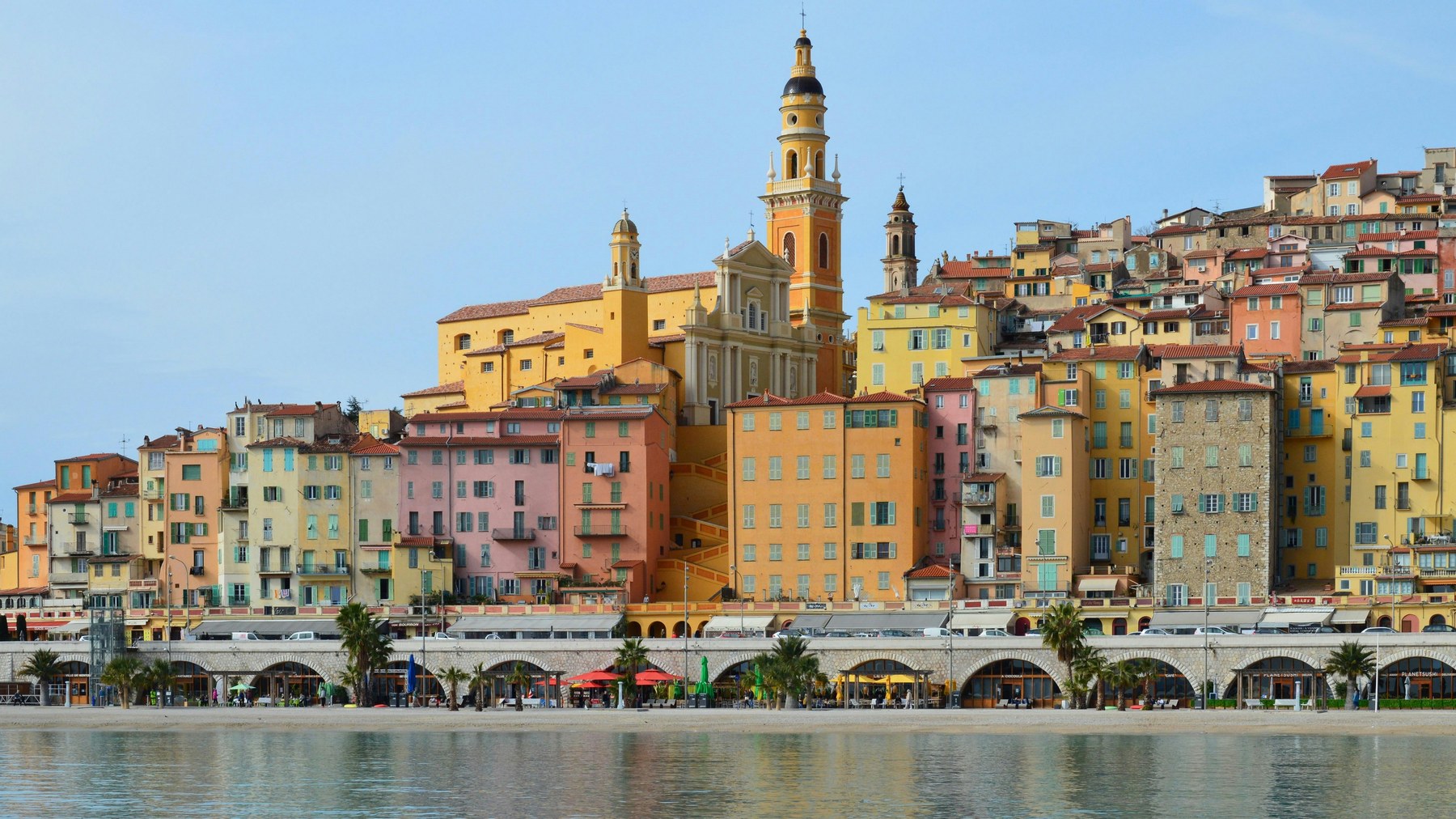
Its appeal is more intimate: a steep old town above the sea, Italian influence, gardens, citrus and enough time to sit somewhere sunny without feeling you're neglecting a museum.

4 days is ideal for Menton.

Food & Drink

Food & Drink

Citrus is the obvious Menton thread, especially lemons, but avoid turning every lemon-flavoured product into a must-try. Look for it where it naturally appears in pastries, preserves or local cooking. The food also reflects the French-Italian border position, which is more useful to notice than chasing a rigid Menton menu.

Menton's protected lemon is the clearest local signature, set within a Franco-Italian Riviera pantry of olive oil, filled pastries, chickpea dishes and market produce.

Must try

Citron de Menton IGP

A thick-skinned, fragrant lemon grown in Menton's sheltered microclimate, protected by an IGP designation since 2015.

Menton's steep, south-facing terraces and mild winters let lemon trees fruit almost year-round, unusual for mainland France. The IGP designation covers lemons grown and packed within a defined local area, and specifies criteria including a minimum size and juice content. The town holds an annual Fête du Citron each February, when tonnes of citrus are used to build sculptures in the Biovès gardens.

Tarte au citron de Menton

Lemon tart made specifically with Citron de Menton, whose lower acidity and thick zest change the result.

Because the Menton lemon is less sharply acidic than standard supermarket lemons, tarts made with it can carry more zest and a gentler curd without turning bitter or overpoweringly sour. Bakeries in town commonly advertise which lemon they use, since it is treated as a point of local pride rather than an interchangeable ingredient.

Barbajuan

Small deep-fried pastry parcels filled with chard, ricotta-style cheese or rice, from the Nice-Menton-Monaco coast.

The name comes from the Niçard dialect and roughly translates as "Uncle John," referring to a frugal relative who supposedly invented the dish to use up leftovers. The dough is folded like a small ravioli or samosa, filled with Swiss chard, brocciu-style cheese, egg and sometimes rice, then fried until crisp — closer to Ligurian Italian cooking than to inland French cuisine, reflecting the border position.

Pichade

Menton's own flatbread, similar to pissaladière but usually made without anchovies.

Pichade is a thick, chewy dough topped with slow-cooked onions, tomato and black olives, baked until the edges crisp. It's closely related to the Niçoise pissaladière but is often served without anchovy fillets, and Menton bakeries treat it as a distinct local version rather than a variant of the Nice dish.

Socca

A thin, griddle-baked chickpea-flour pancake shared across the Riviera coast from Nice to Menton.

Socca is made from chickpea flour, water and olive oil, poured thin onto a very hot round copper tray and baked until the edges blister and char. It's sold by weight from street stalls and market vans, torn into rough pieces and eaten hot with black pepper rather than served as a neat, cut portion.

Menton olive oil

Oil pressed from olives grown on the same terraced hillsides as the town's lemons.

The same sheltered slopes that suit citrus also carry old olive groves, some centuries old, and small local mills press oil from them in autumn. It tends toward a milder, less peppery profile than oils from further inland Provence, and is used throughout the region's cooking rather than sold mainly as a gift item.

Good to know

  • Opening days and named businesses change: verify any business-level recommendation at trip time.

Art & Architecture

Menton climbs before it spreads out

Menton contains two very different ideas of what a Mediterranean town should be. The older one climbs steeply from the sea in tight streets, stairs and Baroque spaces around Saint-Michel. The later one spreads more generously through villas, hotels and gardens associated with Menton's development as a fashionable winter resort.

You can feel the change without knowing the dates. One city makes you climb. The other wants room, views and planting.

Don't missPay attention to elevation. Menton's architecture makes much more sense when you notice how quickly the town rises from the waterfront.

Wendelse tipDon't judge Menton only from the seafront. The old town is doing something completely different a few minutes uphill.

Must see

Saint-Michel and the old town around it

Approach Saint-Michel from below.

The church matters, but the sequence of stairs, ramps and spaces around it is what makes the ensemble memorable. The parvis is not simply leftover ground in front of a façade; it forms part of a Baroque urban composition on the slope.

Then look down. The sea is close, but the route you have just climbed compresses a surprising amount of town between waterfront and church. Notice the campaniles too, with their glazed roof tiles catching light above the dense old town.

Look for: The pebble mosaic beneath your feet on the parvis. Menton's calades turn beach stones into patterned paving.

The Belle Époque city

Menton's nineteenth-century expansion speaks a different language.

As the town developed as a resort, villas, hotels and larger buildings appeared beyond the compressed historic core. Wealthier winter visitors wanted sunlight, gardens, views and a different relationship with the landscape.

Don't look for one definitive Belle Époque monument. Instead, notice the change in urban grain: larger plots, more planting, more space around buildings and architecture intended to be seen within a resort landscape. Against the compressed old town, that extra space becomes immediately noticeable.

A garden as architecture

In Menton, choosing a garden is not taking a break from architecture.

The resort city depended partly on climate and landscape. Gardens around villas and estates became designed environments in which paths, terraces, walls, planting and buildings work together.

Choose one that fits your trip rather than trying to collect them. Once inside, notice how often the garden manages slope and frames views. The architecture isn't only the house.

Look closer

Look up for glazed tiles

The old-town skyline has flashes of colour that don't come from painted façades.

The campaniles around Saint-Michel use glazed roof tiles, giving the Baroque ensemble a distinctive upper edge.

They are easiest to appreciate from below, where the towers rise clear of the tightly packed streets.

The paving came from the beach

Menton's calades are pebble mosaics made from stones traditionally collected from the shore, sorted and set into mortar.

The Saint-Michel parvis received an elaborate example in the eighteenth century. Look down before entering the church.

This is one of those small pieces of local building culture that generic descriptions of “Mediterranean charm” manage to miss completely.

A suggested walk

From sea level into the old town

Start low, near the waterfront. Then climb towards Saint-Michel rather than approaching the old town from above.

Watch the architecture change as the gradient increases. Streets narrow. Stairs replace easy routes. Buildings crowd closer. Views of the sea appear behind you rather than ahead.

Reach the Saint-Michel ensemble and stop. Then keep moving into the old town instead of immediately descending. The point of the walk is the compression. Menton manages to stack an old Mediterranean town above the sea, then later spread a much more spacious resort city around it. You can understand both better once you've felt the difference under your feet.

Why Wendelse likes it

Getting around

Walk, accepting hills and steps. Local buses can help with gardens or outer areas. The railway is useful for the Riviera but shouldn't tempt you to spend a short Menton break commuting to somewhere else every day.

Rhythm and pacing

Do the steep old town when the temperature suits you, then slow down by the sea. Menton benefits from deliberately underfilling the itinerary.

Don't overdo it

Don't turn every garden into an obligation. There's no need to treat Monaco as automatically more important just because it's nearby.

Season and timing

The Lemon Festival is a major seasonal event and changes the town. Summer heat makes hill climbs better earlier or later.

Birmingham · 6–9 November · 4 days

A suggested shape for your days.

Built around your dates and what you said you're in the mood for. The journey itself isn't checked until you choose dates in Results.

Friday · 6 November

Arrive & settle in

Arrival day

Afternoon
  • Arrive and check in.
  • Historic garden visit — Historic garden visit is one of the strongest ways to understand Menton without turning the day into a checklist.

Nothing else planned. That's deliberate.

Saturday · 7 November

Your big exploring day

Weekend

Morning
  • Market and Menton food — Market and Menton food is one of the strongest ways to understand Menton without turning the day into a checklist.
  • Old town and basilica — Old town and basilica is one of the strongest ways to understand Menton without turning the day into a checklist.

Keep the afternoon free — wander, sit somewhere, do nothing.

Sunday · 8 November

Take Menton at your own pace

Weekend

Afternoon
  • Jean Cocteau context / museum area — Jean Cocteau context / museum area is one of the strongest ways to understand Menton without turning the day into a checklist.
Evening
  • Seafront walk toward the Italian border — Seafront walk toward the Italian border is one of the strongest ways to understand Menton without turning the day into a checklist.

Nothing else planned. That's deliberate.

Monday · 9 November

One last morning

Departure day

Morning
  • Breakfast, then a last walk through town.
Afternoon
  • Lunch, then the journey home.

Leave gaps between plans — nothing here needs rushing.

Prototype itinerary. Activity availability is illustrative, not live opening hours.

Don't miss

Even if it's not what you came for.

Food & Drink

Taste Menton properly

Menton's protected lemon is the clearest local signature, set within a Franco-Italian Riviera pantry of olive oil, filled pastries, chickpea dishes and market produce.

  • Citron de Menton IGP
  • Tarte au citron de Menton
  • Barbajuan
Explore Food & Drink →

Art & Architecture

What makes Menton look like Menton

Menton rises theatrically from the sea: ochre and pastel façades, steep medieval passages and a Baroque religious ensemble are layered with Belle Époque resort architecture and Cocteau interventions.

  • Basilique Saint-Michel
  • Chapelle des Pénitents Blancs
  • Old Town stairways
Explore Art & Architecture →

Getting there

Choose your dates and we'll check real flights and the journey from Birmingham.

Check a journey for your dates →

Traveller fit

Is Menton your kind of place?

Food
★★★★☆4 out of 5
History
★★★★☆4 out of 5
Architecture
★★★★☆4 out of 5
Walkability
★★★★★5 out of 5
Outdoors
★★★★★5 out of 5
Atmosphere
★★★★★5 out of 5

Things worth doing

A first day that works

Old town climb; Saint-Michel area; lunch; seafront and an unhurried afternoon.

If you have a second day

Choose one garden; market/food; longer coastal wandering; sit somewhere with a view.

An extra day, or bad weather

Another day can support a nearby Riviera excursion, but only after Menton has had enough time itself.

Where to stay

Stay near the old town or seafront

Best for relaxed coastal breaks

A central base keeps the station, beach, market and old-town slopes within walking distance.

Ready to make it a trip?

Menton

4 days · Walkable · Outdoors · Food · Architecture · Culture

Prototype placeholders — nothing is connected to a booking service yet.

← Back to your Wendelse