Food & Drink
Taste Mantua properly
Mantuan cooking is unusually sweet-savoury: pumpkin, mostarda and amaretti meet rice, pork and crumbly almond desserts in a cuisine shaped by court and countryside.
- Tortelli di zucca
- Risotto alla pilota
- Sbrisolona
Mantova
Italy
A Renaissance court without the crowds.
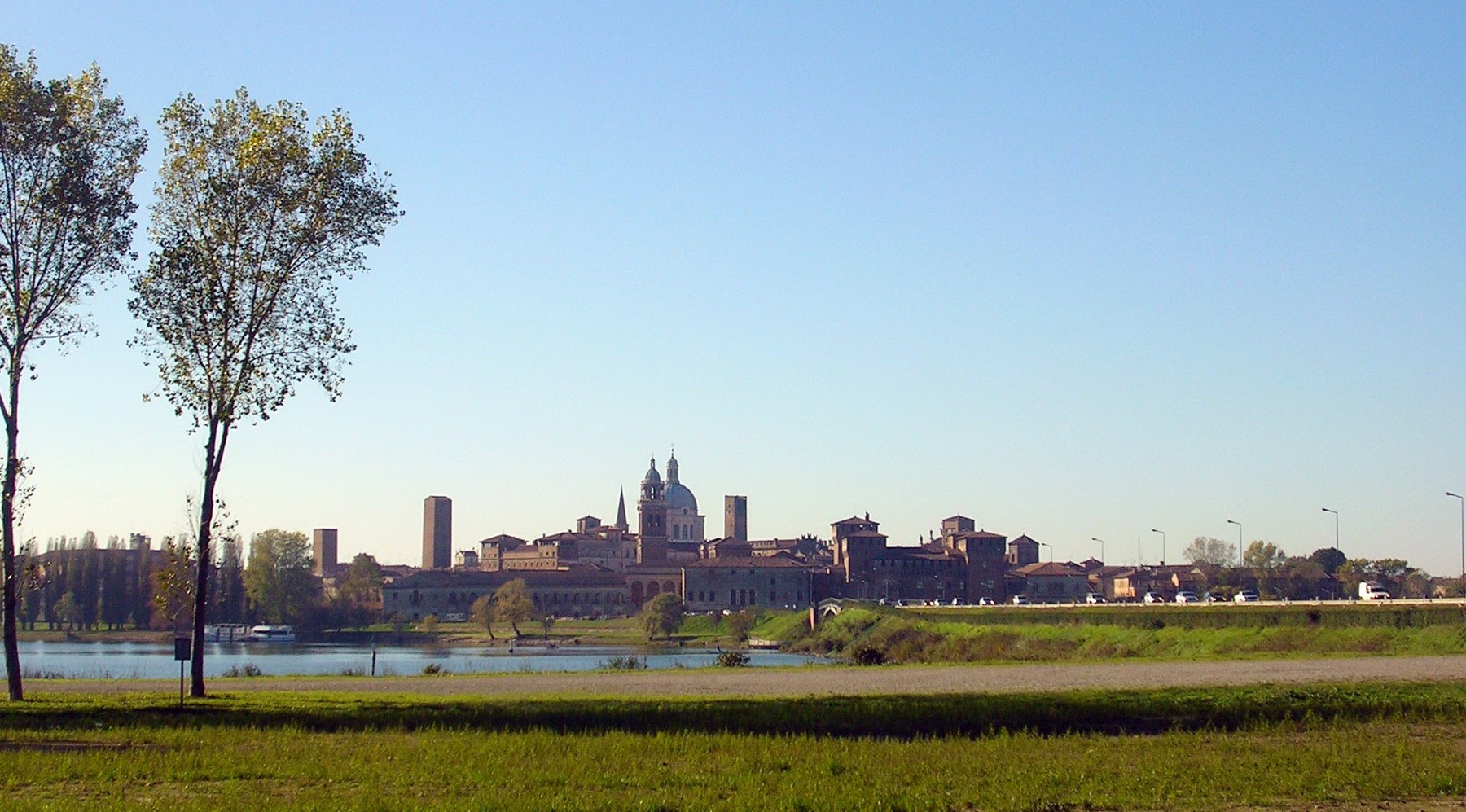
Mantua is small enough to feel manageable but culturally much bigger than its size suggests. The Gonzagas left two extraordinary palace experiences, and the lakes stop the city feeling like a sequence of interiors.
The trick is not to do Palazzo Ducale and Palazzo Te at full intensity back-to-back.
4 days is ideal for Mantua.
Food & Drink
Mantuan cooking is unusual within Italy for its sweet-savoury pairings, a legacy of the Gonzaga court kitchens: pumpkin meets amaretti and mostarda in a stuffed pasta, and a crumbly almond cake stands in for anything more elaborate at the end of a meal. It's a small, distinctive cuisine worth taking on its own terms rather than as a variant of Veneto or Emilian food.
Mantuan cooking is unusually sweet-savoury: pumpkin, mostarda and amaretti meet rice, pork and crumbly almond desserts in a cuisine shaped by court and countryside.
Must try
Pasta parcels filled with roasted pumpkin, amaretti biscuits, mostarda and Parmigiano, usually dressed simply in butter and sage.
The filling combines roasted pumpkin with crushed amaretti (almond biscuits), mostarda mantovana (candied fruit in a mustard-spiked syrup) and Parmigiano, producing a sweet-savoury flavour that is unusual outside Mantua and nearby areas such as Ferrara. It is typically served with nothing more than melted butter and sage, so the filling isn't masked.
A filling with a genuine sweet edge from amaretti and mostarda, not just plain pumpkin purée.
Trattorie across Mantua, particularly in autumn when pumpkin is in season.
A dry, grainy risotto made with pork sausage meat, said to originate with the pilotas, the rice-mill workers of the Mantuan countryside.
Unlike a creamy Milanese-style risotto, alla pilota is cooked with less liquid so the grains stay separate and firm, and it's studded with salamella, a coarse fresh pork sausage crumbled into the rice as it cooks. The name refers to the pilota, the rice-husking workers of the Mantuan plain, whose everyday meal this is thought to have been.
Rice grains that are distinct rather than bound together in a creamy sauce.
Traditional Mantuan trattorie.
A dense, crumbly almond and cornmeal cake, traditionally broken by hand rather than sliced.
Sbrisolona takes its name from briciole (crumbs) in the local dialect: made from cornmeal, flour, almonds, butter, sugar and lard, it bakes into a deliberately dry, crumbly texture that shatters when broken. It's meant to be cracked apart with the hands or a light tap, not cut cleanly with a knife, and is often served alongside a sweet wine or coffee.
A rough, uneven surface studded with whole or roughly chopped almonds.
Pasticcerie and restaurants across Mantua.
Poached pike dressed in a cold sauce of anchovies, capers, parsley and olive oil, tied to Mantua's lakes.
Mantua is ringed by three artificial lakes formed from the Mincio river, and freshwater fish such as pike have long featured on local menus as a result. The poached fish is served cold, dressed with a punchy sauce built on anchovies, capers, garlic and parsley — a contrast to the richer, meatier dishes that otherwise dominate Mantuan cooking.
A cold or room-temperature presentation, rather than a hot fish dish.
Restaurants near the lakes or in the historic centre.
A sparkling, dry-to-off-dry red wine specific to the Mantuan area, distinct from the sweeter Lambrusco commonly exported abroad.
Lambrusco Mantovano is a DOC wine made from Lambrusco grapes grown around Mantua; it's typically drier than the sweet, fizzy Lambrusco widely sold abroad, and its light effervescence and acidity make it a practical match for the region's rich, fatty dishes such as salame and tortelli.
A dry (secco) or semi-dry style rather than the sweeter export versions.
Local trattorie and wine bars in Mantua.
Candied fruit preserved in a mustard-spiked sugar syrup, used as a condiment and as the base of Mantua's tortelli filling.
Whole or large pieces of fruit — often quince, pear or apple — are candied and steeped in a syrup carrying a mustard-oil sting, producing a condiment that's sweet with a sharp aftertaste. It's traditionally served alongside boiled or roast meats, and is also folded into the filling of tortelli di zucca.
A genuine peppery mustard bite behind the sweetness, not just candied fruit.
Delicatessens and restaurants across Mantua.
Good to know
Art & Architecture
Mantua didn't become a Renaissance city by starting again. It was already old and irregular when the Gonzagas began reshaping it. Over generations they added palaces, churches, gardens, squares and new routes to what was already there. Even Palazzo Ducale wasn't conceived as one enormous building: separate structures accumulated and connected until the result began to behave like a small city of its own.
That makes Mantua more interesting than a collection of Renaissance masterpieces. Court and city keep bleeding into one another.
Don't missPay attention to transitions. In Mantua, moving through a doorway, courtyard or square can matter as much as arriving at the room on the other side.
Wendelse tipDon't use all your attention inside Palazzo Ducale. You need enough energy left to notice what happens when you come back out.
Must see
Calling this a palace slightly undersells it.
The complex grew from buildings begun before Gonzaga rule into an enormous court of rooms, towers, corridors, streets, courtyards and gardens. Over centuries, separate pieces were connected until the palace acquired the character of a city within the city.
Don't treat the visit as a hunt for the Camera degli Sposi and then switch off. Mantegna's room is extraordinary, but the architecture is doing something larger around it: repeatedly moving you between enclosed rooms and open courts, formal spaces and connecting passages. You start to lose track of where one building ends and another begins.
Look for: Courtyards that feel more like small piazzas than spaces inside a palace.
Wendelse tip: If palace fatigue starts setting in, stop trying to see everything. The scale and connectedness are the point.
Come out of the court and stay with the city.
Piazza Sordello is broad and comparatively severe, with Palazzo Ducale occupying one side of the space. Move south and Mantua gradually tightens into streets and smaller civic spaces before opening again around Piazza delle Erbe.
The change is useful because it stops Renaissance Mantua becoming synonymous with the Gonzagas' private rooms. Here are towers, arcades, medieval fabric, later façades, shops and cafés sharing the same compact centre. Mantua's history hasn't been separated into architectural districts. Walk the sequence rather than treating the squares as separate sights.
Palazzo Te makes more sense because it isn't Palazzo Ducale.
Federico II Gonzaga commissioned Giulio Romano to create a suburban villa beyond the dense court at the centre. The journey outward matters: this was a place of leisure, entertainment and display, deliberately different from the complicated working palace you have already seen.
The architecture can initially look controlled and classical. Then the decoration starts misbehaving. The Sala dei Giganti pushes that furthest, dissolving the room beneath a painted collapse of architecture, bodies and landscape. Elsewhere Giulio Romano plays more quietly with classical expectations. Don't reduce Palazzo Te to the spectacular rooms. Notice how much freedom comes from having left the city palace behind.
Look closer
Once you know the complex wasn't designed in one campaign, its irregularity becomes evidence.
Look for changes in scale, alignment and atmosphere as you pass between sections. A corridor suddenly leads into a garden; an enclosed room opens onto a court; one architectural language gives way to another.
The inconsistencies are part of the story.
The city retained an older street pattern while Renaissance interventions were inserted into it.
That means major buildings don't always arrive with the grand approach you might expect. Watch how quickly monumental architecture gives way to ordinary streets, arcades and older fabric.
A suggested walk
Start around Palazzo Ducale and Piazza Sordello.
Move south through the historic centre, letting the grand court architecture fragment into streets, shops and smaller squares. Pass through Piazza delle Erbe and continue away from the densest centre towards Palazzo Te.
Don't think of the route as a list of monuments. The change is spatial: court → city → edge → villa. By the time you reach Palazzo Te, its lower, more open and deliberately recreational character makes more sense. Mantua's Renaissance wasn't one architectural project. It was a series of different answers to what a ruling court wanted from a city.
Why Wendelse likes it
Walk in the centre. Palazzo Te is still reachable on foot, though local buses can save energy. The lakeside paths are worth using as part of the day, not merely as transport.
One major palace per half-day is enough. Break the interiors with squares, lunch and water. Mantua rewards a slower two- or three-day pace.
Don't treat Palazzo Te as an appendix after exhausting yourself in Palazzo Ducale. There's no need to overlook the lakes simply because the masterpieces are indoors.
Palace access and Camera degli Sposi arrangements should be checked for the actual date. Hot summers favour museum mornings and waterside evenings.
Birmingham · 6–9 November · 4 days
Built around your dates and what you said you're in the mood for. The journey itself isn't checked until you choose dates in Results.
Friday · 6 November
Arrival day
Nothing else planned. That's deliberate.
Saturday · 7 November
Weekend
Leave gaps between plans — nothing here needs rushing.
Sunday · 8 November
Weekend
Nothing else planned. That's deliberate.
Monday · 9 November
Departure day
Leave gaps between plans — nothing here needs rushing.
Prototype itinerary. Activity availability is illustrative, not live opening hours.
Don't miss
Food & Drink
Mantuan cooking is unusually sweet-savoury: pumpkin, mostarda and amaretti meet rice, pork and crumbly almond desserts in a cuisine shaped by court and countryside.
Art & Architecture
Mantua is a compact Gonzaga court city where medieval civic fabric, Alberti's classicism and Giulio Romano's theatrical Mannerism can be compared in a single walk.
Choose your dates and we'll check real flights and the journey from Birmingham.
Check a journey for your dates →Traveller fit
Palazzo Ducale in the morning; civic centre and Sant'Andrea; unhurried lunch; lakeside walk and an easy evening.
Palazzo Te; wander back through the southern centre; food-focused lunch; leave time for whichever church, museum or square caught your attention.
If you're staying a third day, keep it deliberately light or use it for Sabbioneta if the connection works for your dates and interests.
Where to stay
Best for first-time visitors
The centre is compact enough to walk; staying centrally keeps Palazzo Ducale, the civic squares and evening atmosphere close at hand.
Mantua
4 days · Architecture · History · Food · Walkable
Prototype placeholders — nothing is connected to a booking service yet.