Walkable & Relaxed
Leave some space in the weekend
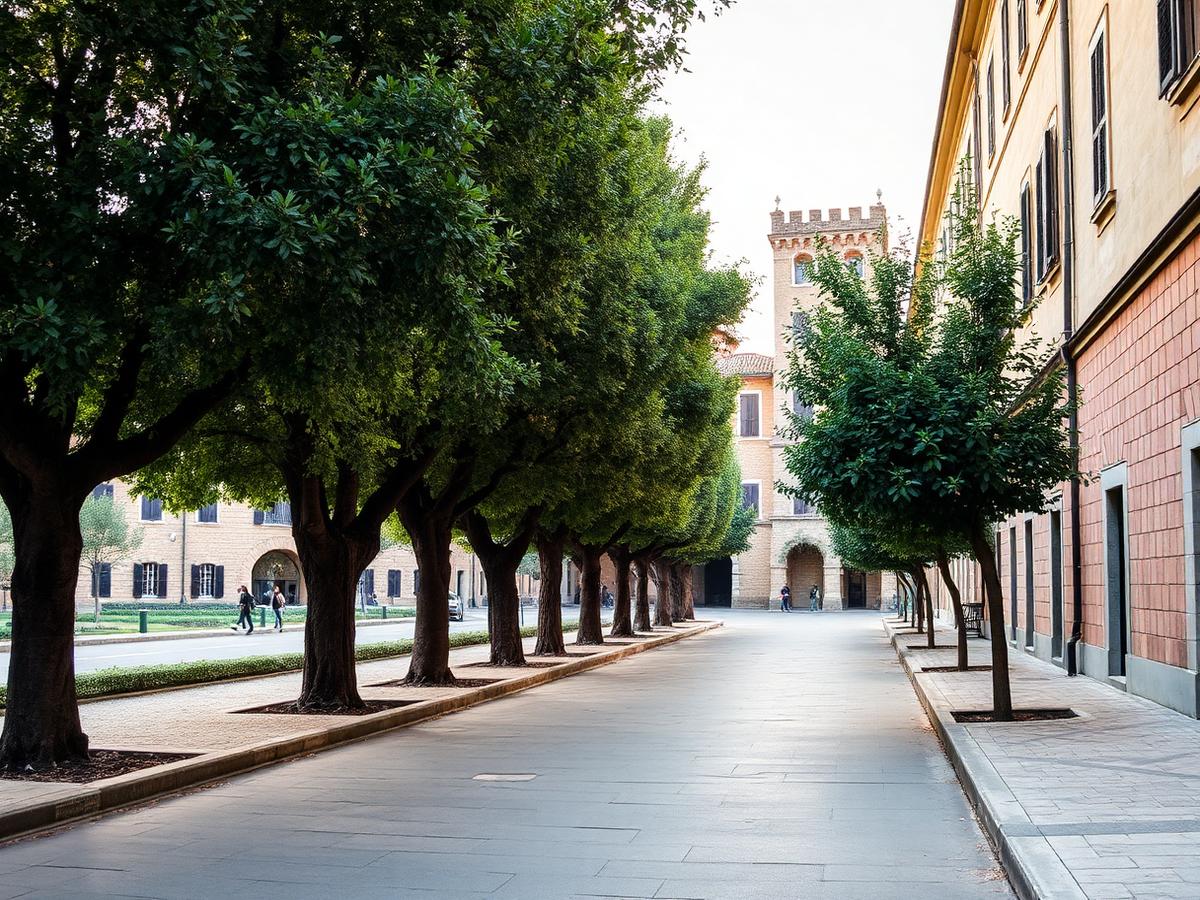
Lucca's walls, compact historic centre and inviting squares make it particularly easy to enjoy without a packed itinerary.
- City walls
- Historic centre
- Piazza dell'Anfiteatro
Italy
Slow down. Wander further.
Lucca is one of Tuscany's most rewarding small-city escapes. Encircled by its extraordinary Renaissance walls, the compact historic centre is made for walking, wandering and stopping whenever something catches your eye.
Climb a tower for views across the red rooftops, explore the Roman-shaped Piazza dell'Anfiteatro, pause beneath the trees on the city walls, then settle into a café or trattoria without feeling that you have to rush on to the next attraction.
It is precisely this combination of history, architecture, food and an unhurried rhythm that makes Lucca particularly well suited to a short break without a car.
4 days works well in Lucca.
History
Lucca's history isn't confined to museums. The shape of Piazza dell'Anfiteatro remembers a Roman amphitheatre. Medieval towers rise above streets shaped by centuries of trade. The enormous walls surrounding the centre tell the story of a small state determined to protect its independence.
Walk through Lucca and different versions of the city are still visible on top of one another. You just need to know what you're looking at.
Wendelse tipWalk between historical periods rather than visiting them as separate attractions. In Lucca they are minutes apart.
Key periods
Lucca began as a Roman colony on the plain of the Serchio, laid out with the regular street grid Roman towns used across Italy.
The town acquired the standard components of Roman urban life, including a forum at its centre and, later, an amphitheatre outside the built-up core.
The grid is still legible in the straight streets and right-angled junctions of the centre, and the amphitheatre survives as the outline of a square rather than as a building.
Where to see it: Piazza dell'Anfiteatro · Piazza San Michele · The central street grid
From the 2nd century BC
Lucca grew rich on trade, above all on silk, and on the merchants and bankers who handled it across Europe.
This is the answer to why a modest-sized city has so many churches, towers and substantial merchant houses: wealth, competition between families, and religious patronage all left buildings behind.
Money built and rebuilt churches, funded the cathedral, and raised the private towers that powerful families used to display their standing.
The compact street pattern of the centre, the surviving towers, and an unusual concentration of medieval church facades.
Where to see it: Guinigi Tower · San Martino · San Michele in Foro · Via Fillungo
Roughly the 11th to 14th centuries
For centuries Lucca governed itself, remaining a separate state while much of Tuscany came under Florentine control.
Independence is the single most useful idea for understanding the city. It explains the scale of the walls, the civic buildings, and why Lucca's story is not simply a chapter of Florence's.
The republic invested heavily in fortification, ringing the centre with the bastioned walls that still enclose it.
The complete circuit of Renaissance walls, and a centre whose shape was fixed by them.
Where to see it: The city walls · Palazzo Ducale
Into the early 1800s
The republic ended when Lucca was reorganised under Napoleonic rule and given to Napoleon's sister, Elisa Bonaparte Baciocchi, as a principality.
The new government reshaped part of the city centre in the formal, open manner favoured at the time, most visibly in the creation of the large square now called Piazza Napoleone.
Piazza Napoleone itself, and the Palazzo Ducale facing it, which served as the seat of government through the changes of ruler.
Where to see it: Piazza Napoleone · Palazzo Ducale
Early 19th century
After the Napoleonic period Lucca was ruled as a duchy by Maria Luisa of Bourbon and her successor, before passing to Tuscany and then into the newly unified Kingdom of Italy.
Lucca's independence did not run unbroken into the modern age — it ended, in stages, within a couple of generations. Understanding that makes the walls read as the defence of something the city eventually lost.
Civic improvements continued under the duchy, and the walls were gradually reimagined as a public promenade rather than a military work.
The tree-lined walls in their modern role as the city's park, and the statue of Maria Luisa in Piazza Napoleone.
Where to see it: The city walls · Piazza Napoleone
19th century
People who shaped it
A Luccan commander and ruler who took control of the city and, for a time, made it one of the leading powers in Tuscany.
His rule is the high point of medieval Lucca's political ambition — a short period in which a city of this size genuinely rivalled its larger neighbours. It didn't outlast him.
The medieval city he governed: the tower houses, the street pattern and the churches of the centre.
Early 14th century
Napoleon's sister, given Lucca to rule as a principality after the republic was dissolved.
Her government ended centuries of self-rule and reshaped part of the centre in the formal style of the period.
Piazza Napoleone and the Palazzo Ducale facing it.
Early 19th century
Duchess of Lucca after the Napoleonic settlement, and the ruler most associated with the city's 19th-century civic improvements.
Her period bridges independent Lucca and the city that would soon be absorbed into Tuscany and then unified Italy.
Her statue in Piazza Napoleone, and the walls in their transformation from defence into public promenade.
1817 onwards
Historical sites
One of Lucca's most famous spaces exists because of a building that has largely disappeared.
A Roman amphitheatre stood on this site. Over the centuries its structure was quarried, built into and built over, and houses gradually occupied the ring it had defined.
An enclosed oval square, reached through low archways, ringed by buildings that follow the ancient footprint. Almost everything you can see is far later than the amphitheatre — the Roman part is the shape.
The oval, not the buildings: the curve of the facades, the way no street enters straight, and how completely enclosed the space feels once you're inside it.
Wendelse tip: Don't just photograph the square. Walk through it knowing that its shape is the ghost of a Roman amphitheatre.
Roman, rebuilt over the medieval centuries · 20–40 minutes
The walls are the most expensive thing the republic ever built, and the clearest surviving statement of what it was trying to protect.
A small independent state surrounded by larger neighbours needed its independence to look expensive to challenge. The walls were built to the standards of the age of gunpowder — low, thick and angled, designed to absorb artillery rather than to look impressive from a distance.
A complete circuit enclosing the historic centre, with projecting bastions at intervals and monumental gates where roads pass through. In the modern city it functions as a raised park.
The bastions pushing out from the line of the wall, the depth of the gate passages, and the sheer thickness of the earthwork under the trees — this is a fortification, not a garden wall.
Something you might otherwise miss: The walls were never the setting for a famous siege. Their significance is that they survived intact precisely because they were never fought over — which is also why Lucca still has a complete circuit when most cities lost theirs.
Renaissance fortification · 45 minutes to 2 hours
A tower house belonging to the Guinigi, one of the merchant families that dominated late medieval Lucca.
Private towers were about status as much as defence. In a city of competing merchant families, height was a way of being seen — and Lucca once had many more towers than the handful that survive.
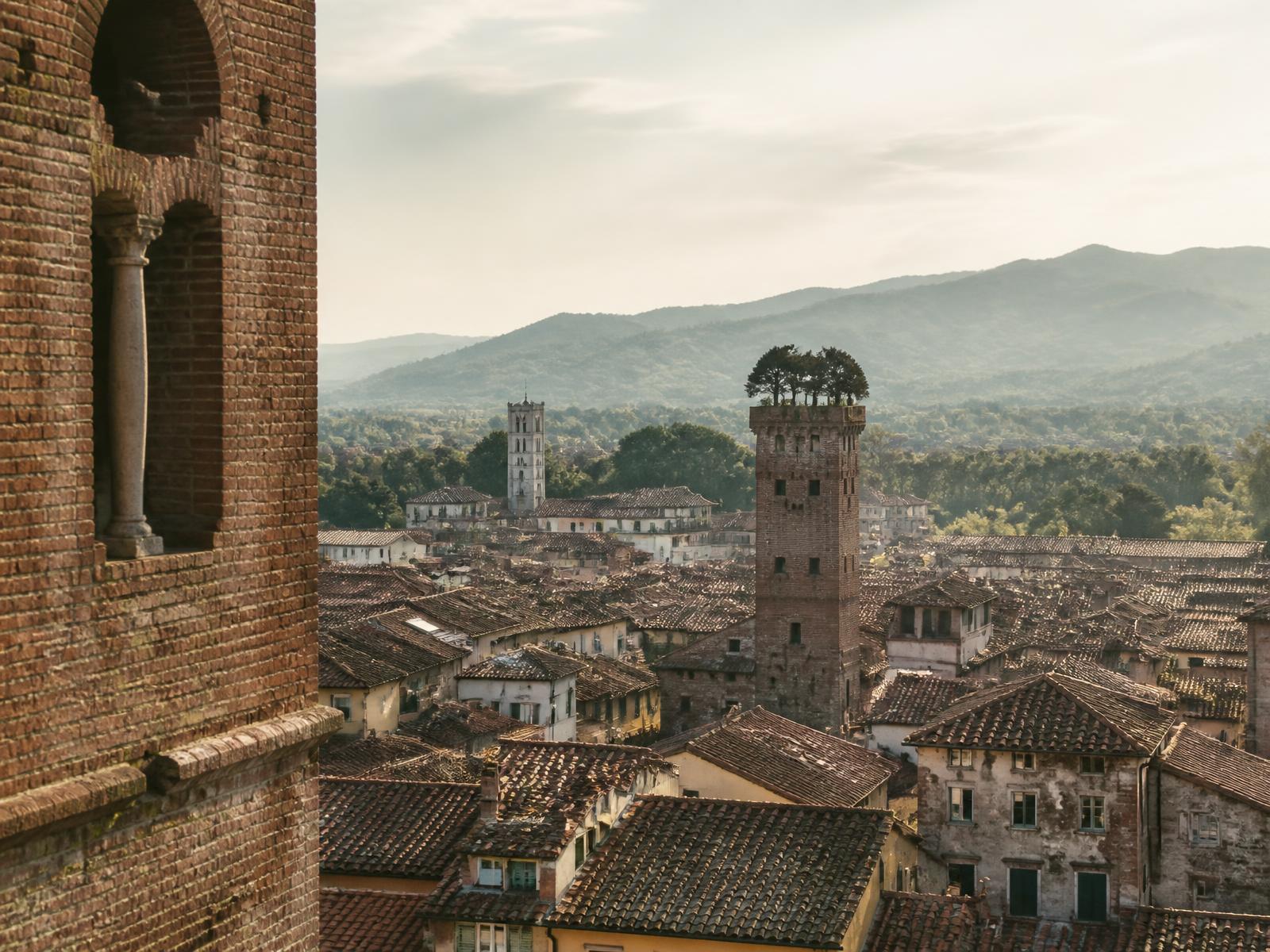
The tower itself, with holm oaks growing from a garden at the top, and long views over the rooftops.
From the top, look for the gaps: the flat roofs and stumps where other towers once stood. The medieval skyline was far spikier than today's.
Medieval · 45–60 minutes
The cathedral was the religious centre of the city and, for centuries, a focus of civic identity as well as worship.
Cathedral-building in Lucca was paid for by the same wealth that raised the towers. It is also home to the Volto Santo, a venerated crucifix that drew pilgrims to the city and gave Lucca a place on the medieval pilgrimage routes through Tuscany.
The asymmetry of the facade, squeezed against the campanile, and the funerary monument to Ilaria del Carretto inside — a reminder that the cathedral was also where Lucca's ruling families placed themselves in front of the city.
Medieval, with later work · 45 minutes
The large tree-shaded square in front of the Palazzo Ducale, laid out during the Napoleonic period.
Creating the square meant clearing buildings in front of the palace — a deliberately modern gesture, and a political one: the new ruler wanted space and symmetry where the medieval city had neither.
An open, regular square quite unlike the tight streets around it, the long front of the Palazzo Ducale, and the statue of Maria Luisa of Bourbon, who ruled after the Napoleonic period ended.
Step from Via Fillungo into the square and notice how abruptly the scale changes. That contrast is the point.
Napoleonic
The main street through the old town, and the commercial spine of the city for a very long time.
Narrow frontages, upper floors older than the shopfronts below them, old signage and lettering, and the towers rising just behind the street line.
Look above the shop windows. The commercial ground floor changes every generation; the building above it usually doesn't.
Medieval to modern
Details to notice
The straight streets and square blocks at the heart of the centre follow the Roman layout, even though almost every building on them is centuries younger.
Lucca once had far more towers than it does now. The surviving ones are the exception; most were reduced or absorbed into later buildings.
Passing through one of the wall gates takes longer than you expect. That depth is the thickness of the fortification you're walking through.
The number and ambition of the medieval churches is the clearest surviving evidence of how much money passed through this city.
Piazza Napoleone's openness and symmetry mark it out immediately from the medieval streets around it — the physical signature of a change of regime.
Not a list of attractions — a walk through the city's story, roughly in order. Everything is inside the walls and within easy reach of everything else.
1. Roman Lucca — Piazza dell'Anfiteatro20–30 minutes
Start where the oldest layer is easiest to see. Walk in through one of the archways and read the shape of the square rather than its buildings.
2. Medieval Lucca — Via Fillungo and the towers45–60 minutes
Follow the commercial spine of the medieval city, looking above the shopfronts, towards the Guinigi Tower. Climb it if you want the skyline; the story works either way.
3. Religious Lucca — San Martino30–45 minutes
The cathedral shows where the city's wealth went, and why pilgrims came here at all.
4. Napoleonic Lucca — Piazza Napoleone and Palazzo Ducale20 minutes
Step out of the medieval streets into the square that replaced them, and the palace that housed each successive government.
5. Independent Lucca — the walls45 minutes upwards
Finish on top of the fortifications that the republic built to stay a republic, and that the city later turned into a park.
What to look forYou are walking forward in time, not between attractions. Each stop should make the previous one make more sense.
Morning, before the centre gets busy · easy
The walls and the historic centre — not a museum. Understanding why the walls exist explains more of Lucca than any single collection.
Three anchors, chosen for understanding rather than coverage.
Skip the tower climb if time is tight; the story doesn't depend on it.
The same story, with room to stop.
Adding more sites won't improve this. Adding time will.
A full day, deliberately not overloaded.
Local tips
Good to know
Walkable & Relaxed
Lucca is particularly good at making an empty afternoon feel like a plan. Inside its Renaissance walls, almost everything you are likely to want from a short break is within walking distance: towers, churches, small squares, cafés, shops and streets that are more enjoyable when you aren't trying to get anywhere quickly.
Walk the walls in the morning. Choose one thing you really want to see. Have a long lunch. Then put the map away. Lucca rewards leaving some of the weekend unplanned.
You do not need a checklist to enjoy Lucca. Most guides help you prioritise attractions; this one is also about knowing when not to schedule another one.
Wendelse tipGive yourself an hour when you are deliberately not trying to reach an attraction. It is usually the part of the weekend people remember.
Start here
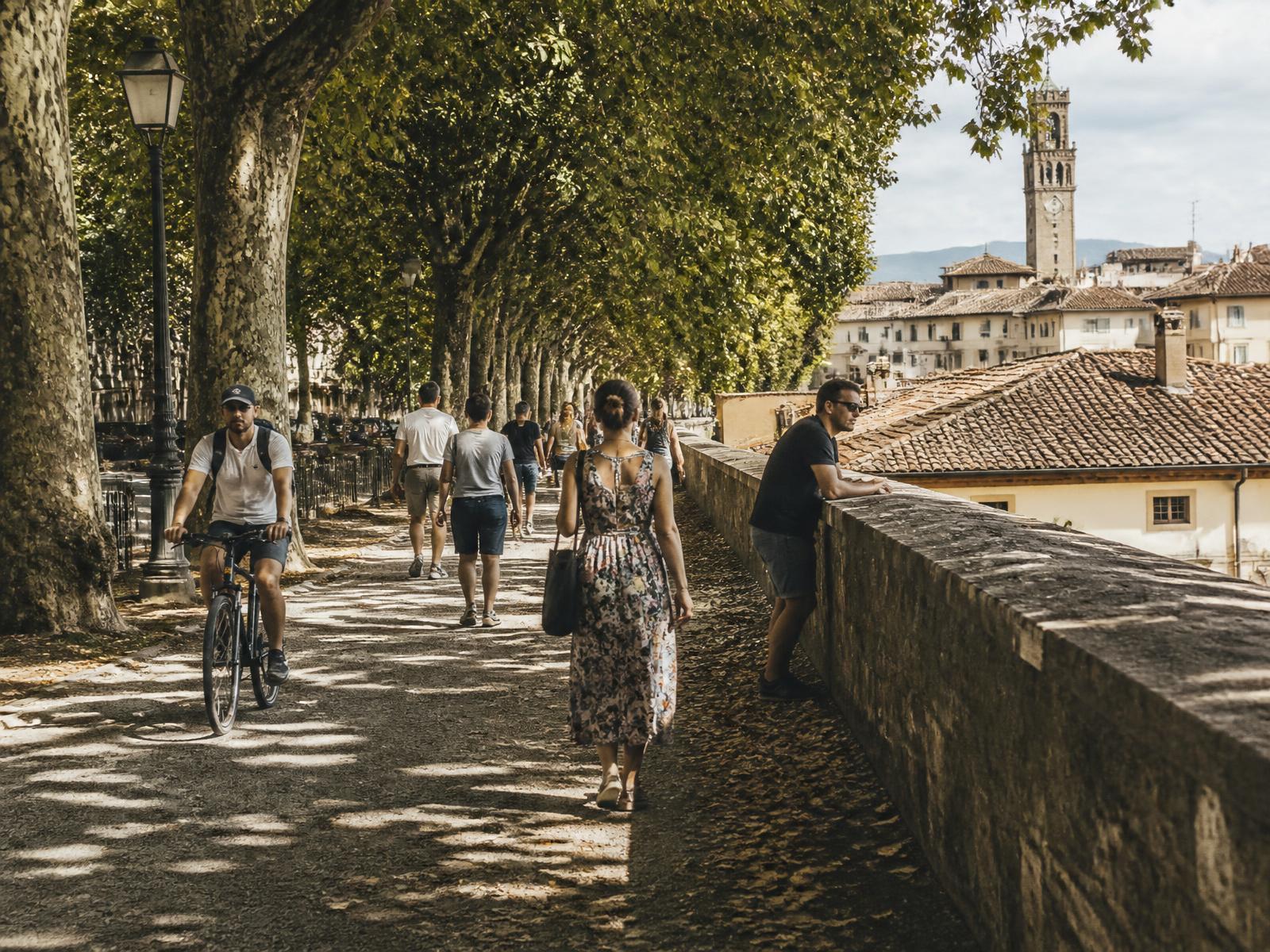
The Renaissance walls encircle the whole historic centre as a broad, tree-lined promenade — a complete circuit of roughly four kilometres, used today as public space rather than defence.
The walls are one of the reasons Lucca works so well as a short break. They give the city a natural walking route without requiring a plan, with views into the centre on one side and across the surrounding country on the other.
Walk the whole circuit, or only part of it. Stop, sit, drop down into the centre when something catches your eye, and come back to the walls later in the day. Cycling is an easy alternative where you'd rather cover the loop quickly.
Wendelse tip: Don't feel obliged to walk the entire circuit at once. Use the walls as part of the weekend rather than something to complete.
45 minutes to 2 hours, depending on how far you go · Morning, or late afternoon into early evening
There is no route here, deliberately. Lucca's enclosed centre makes aimless exploration unusually manageable: the walls keep you oriented, so wandering rarely turns into being lost.
Small streets, unexpected churches, courtyards, shop windows, cafés, quiet squares and carved details are the things most people end up talking about afterwards — and none of them appear on a schedule.
Pick a direction rather than a destination. If a street looks interesting, follow it. Stop when you want a coffee rather than when the plan allows one.
Wendelse tip: Give yourself an hour when you are deliberately not trying to reach an attraction.
60–90 minutes
Best areas to wander
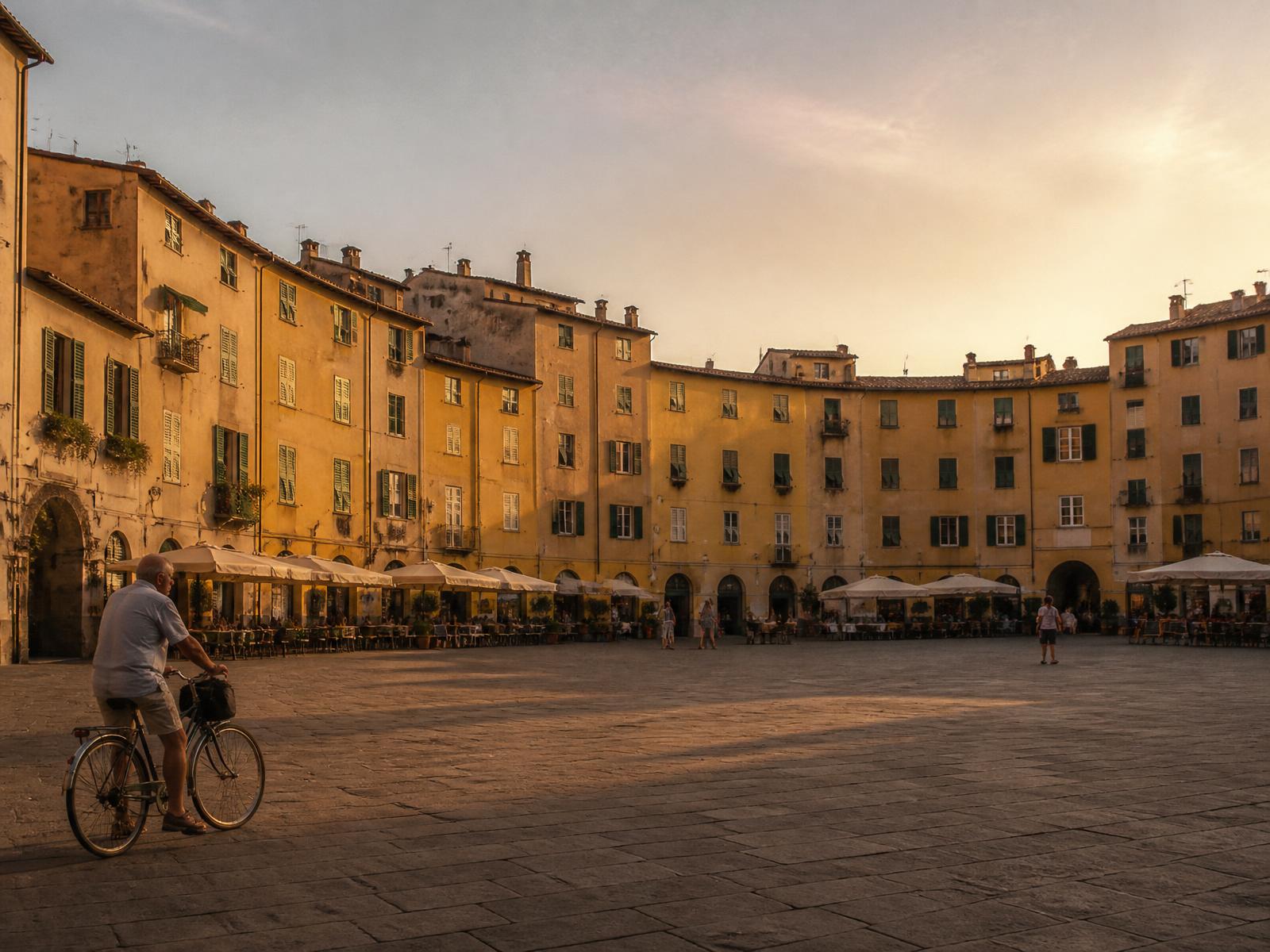
A distinctive oval square whose shape follows the Roman amphitheatre that once stood here, now enclosed by tall ochre facades and reached through low archways.
It is one of the few squares in Italy that feels like a room. Cafés and restaurants line the edges, and the enclosed shape makes it a natural place to stop rather than pass through.
Walk in, look around — and then resist the temptation to immediately walk out again. Coffee, an aperitivo or simply sitting and watching the square is the experience.
30–60 minutes if you stay for a while
The main historic street through the centre, lined with shops, old signage and facades from several centuries, connecting the northern and southern parts of the old town.
Treat it as a loose orientation spine rather than a shopping destination: almost every wander in Lucca crosses it at some point, and the side streets running off it are usually the more interesting part.
The central square of the old town, dominated by the extravagant striped facade of San Michele in Foro and busy with people crossing between one part of the centre and another.
A natural stopping point mid-wander — somewhere to sit for a few minutes, look up at the facade and decide nothing in particular about the rest of the afternoon.
The city's large open square, shaded by plane trees and edged with cafés, used for events and everyday city life.
Less of an attraction than a place where Lucca is simply going about its day. Good for people-watching and easy to fold into a walk between the walls and the centre.
The quieter southern corner of the centre around San Martino, with narrow lanes, workshops and fewer people than the main streets.
A good direction to drift in when the centre feels busy, and an easy way to reach the walls again without retracing your steps.
Slow experiences
Give lunch proper time rather than treating eating as the gap between two attractions. This is about rhythm more than cuisine.
Allow an hour and a half to two hours, sit somewhere you can see the street, and accept that the afternoon will start later than planned.
90–120 minutes
One coffee. One interesting street. One church, if it catches your attention. One square. Maybe a gelato. No schedule.
Spare time in Lucca is a benefit rather than a gap in the itinerary — the centre is small enough that the afternoon fills itself.
A half day, loosely
Once the daytime sightseeing rhythm slows, the streets and squares take on a different character — worth being outside for.
Walk between a couple of squares, stop for an aperitivo somewhere with tables outside, and let dinner happen at the end of it rather than at a booked hour.
Early evening
Lucca has no shortage of places to pause, and the choice matters less than the habit of stopping.
Cafés ring Piazza dell'Anfiteatro and Piazza San Michele; Piazza Napoleone has shaded tables and space; and the quieter streets inside the walls have small bars where you'll mostly be among locals.
Choose one thing to climb
A medieval tower with holm oaks growing from a small garden at the top, reached by a climb up stairs, and one of the best views over Lucca's rooftops.
A relaxed day can comfortably include one major sight without turning into a sightseeing schedule. If you want to climb something, make it this one.
Go once, early or late, and let it be the fixed point of the day rather than the first of several.
45–60 minutes
Lucca's civic clock tower, with a wooden stair climb and another perspective across the centre.
An alternative to Guinigi Tower rather than an addition to it. You don't need to climb both towers just because they're there.
30–45 minutes
Not a fixed itinerary — a rhythm. The day should feel spacious, and skipping any part of it is fine.
If half of this doesn't happen, the day has still worked.
A flexible shape for three or four days. Nothing here needs booking in advance.
Local tips
If the weather turns
Good to know
Why Wendelse likes it
Lucca rewards curiosity rather than a checklist. Its historic centre is compact enough to explore on foot, but full of enough churches, towers, squares, cafés and small streets to keep revealing something new. The major sights matter — but so does simply wandering between them.
Everything worth seeing sits inside the walls, minutes apart. Once you arrive you can largely forget about transport, which is why Lucca works so well for travellers who don't want to hire a car.
Roman foundations, a medieval cathedral, towers you can climb and more than four kilometres of tree-lined Renaissance walls — centuries of the city are within easy walking distance of each other.
Lucca is an established Tuscan city, just a less frenetic one. Three or four days is enough to see it properly without a packed itinerary, with time left for long lunches and afternoons that go nowhere in particular.
The historic centre is enclosed by the walls and walking is central to the experience. Tower climbs involve stairs, and some attractions ask for tickets or a reservation — worth checking before you set off.
Birmingham · 6–9 November · 4 days
Built around your dates and what you said you're in the mood for. The journey itself isn't checked until you choose dates in Results.
Friday · 6 November
Arrival day
Nothing else planned. That's deliberate.
Saturday · 7 November
Weekend
Leave gaps between plans — nothing here needs rushing.
Sunday · 8 November
Weekend
Nothing else planned. That's deliberate.
Monday · 9 November
Departure day
Leave gaps between plans — nothing here needs rushing.
Prototype itinerary. Activity availability is illustrative, not live opening hours.
Don't miss
Walkable & Relaxed
Lucca's walls, compact historic centre and inviting squares make it particularly easy to enjoy without a packed itinerary.
History
Roman streets, medieval towers, an independent republic and Renaissance walls have all left their mark on Lucca.
Art & Architecture
Towers, churches and palaces make Lucca's changing fortunes unusually visible.
Choose your dates and we'll check real flights and the journey from Birmingham.
Check a journey for your dates →Traveller fit
More than four kilometres of tree-lined promenade turns sightseeing into a walk.
Sit in the oval square shaped by the Roman amphitheatre and let the city pass.
Guinigi Tower, Torre delle Ore and San Martino, all within a short wander.
Where to stay
Best for slow explorers
Sleeping within the historic centre means the walls, the piazzas and dinner are all a short walk away — and you never need a car.
Lucca
4 days · Architecture · Walkable · History
Prototype placeholders — nothing is connected to a booking service yet.