Leidse kaas
A Gouda-style cheese studded with whole cumin seeds, historically tied to Leiden's cloth and dairy trade.
Leidse kaas is a semi-hard cow's-milk cheese made in the Gouda style but marked out by whole cumin seeds folded through the curd, giving it a peppery, aromatic bite that plain Gouda lacks. It carries the city's own stamp of a crossed key, a mark once used to certify weight and quality at the civic cheese market.
A visible scatter of cumin seeds through the cut face, and the crossed-key stamp on traditionally produced wheels.
Cheese stalls at the Saturday market and specialist cheese shops in the centre.
Hutspot
A mash of potato, carrot and onion tied directly to the city's own history rather than to the Netherlands in general.
Hutspot is a rough mash of potato, carrot and onion, sometimes with braised meat alongside. Leiden's own telling of the dish links it to the lifting of the Spanish siege on 3 October 1574, when a pot of it was said to have been found abandoned in the retreating army's camp. The city still marks Leidens Ontzet on 3 October with hutspot eaten publicly and communally, rather than treating it as a museum piece.
It is the one dish that connects directly and specifically to Leiden's own history, rather than to Dutch food culture generally.
Widely served in the centre around 3 October; some traditional kitchens keep it on the menu year-round.
Haring
Raw, lightly salt-cured young herring, sold from carts and eaten with chopped onion and pickle.
Dutch new-season herring (Hollandse Nieuwe) is cured just enough to remove the rawness rather than cooked, then served whole or chopped with diced onion and gherkin. It is a national snack rather than a Leiden speciality, but herring carts are a genuine fixture of Dutch town centres, including Leiden's own market streets.
Traditionally taken by the tail and eaten in a few bites, or ordered chopped in a bread roll (broodje haring) if that feels easier.
Fish stalls in the market and fixed herring carts near the centre.
Stroopwafels and poffertjes
Two everyday Dutch sweets worth knowing rather than seeking out specifically in Leiden.
A stroopwafel is a thin waffle split and filled with caramel syrup, best bought warm from a market stall where the syrup is still soft. Poffertjes are small, puffy, yeasted pancakes served in a stack with butter and icing sugar, usually from a dedicated stand rather than a café menu. Neither is specific to Leiden; both are part of the same market-and-snack food culture found across Dutch towns.
Market stalls, especially on the Saturday market days.
Leiden's Saturday market
A large open-air market along the Nieuwe Rijn and Aalmarkt, running since the medieval period.
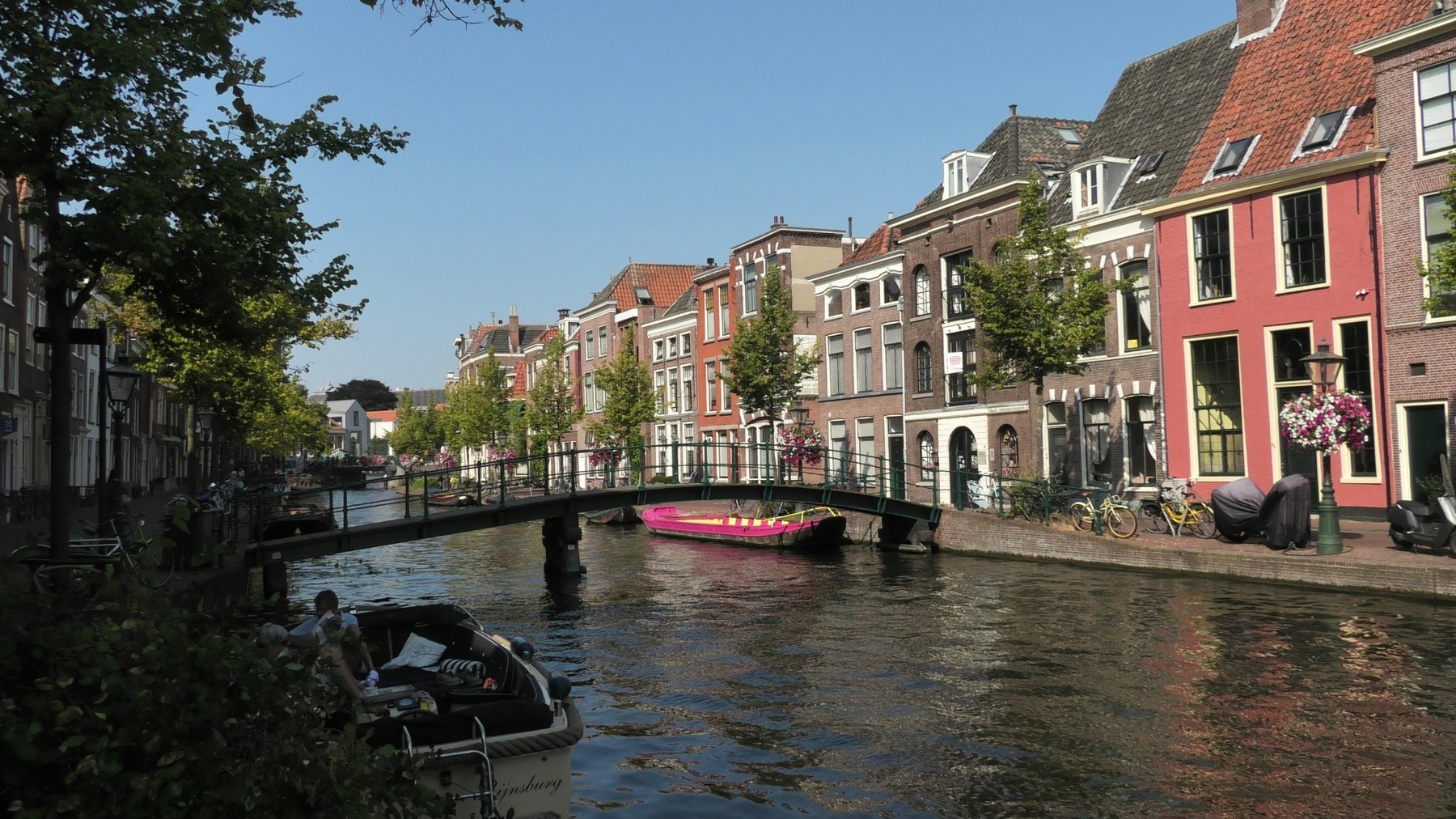
Leiden holds general markets on Wednesdays and Saturdays, with stalls strung along the Nieuwe Rijn canal and the Aalmarkt selling cheese, fish, bread, flowers and household goods side by side. It is a working local market rather than a tourist attraction, which is exactly its value: it shows how the city actually shops and eats day to day.
It connects the destination's food identity to place, season and everyday shopping rather than restaurant menus alone.
Wendelse tip: Go in the late morning before stalls start packing up.
Nieuwe Rijn and Aalmarkt, in the historic centre.