Heidelberg
Germany
The castle gets the attention. The setting makes it work.
Heidelberg is at its best when you keep changing perspective: the castle above the old town, red sandstone through the streets, the Neckar below, then the whole scene viewed back from the opposite bank. Give the castle a proper part of the day, but don't let Heidelberg become a succession of historic buildings.
Walk down through the Altstadt, cross the Old Bridge and leave enough time for the river, cafés and university streets. If the weather is good, the Philosopher's Walk is where the city's setting really comes together.
4 days is ideal for Heidelberg.
Art & Architecture
The ruin looks older than the city below it
Heidelberg Castle dominates the city so completely that it's easy to let it explain everything. Resist that. The castle itself isn't one building. Medieval residential fabric, successive Renaissance palaces, fortifications and later destruction occupy the same hillside complex. Then look down. Much of the historic city beneath it was devastated in the wars of the late seventeenth century and subsequently rebuilt. The apparently complete old town and the spectacularly broken castle therefore tell two different stories about what happened after destruction.
That reversal makes Heidelberg more interesting. The ruin above isn't simply the oldest thing. And the intact-looking city below isn't simply what survived.
Don't missLook down from the castle before concentrating on the view. You're looking at a city whose apparent age can be deceptive.
Wendelse tipGive the castle courtyard at least as much attention as the panorama. The façades facing one another explain Heidelberg's architectural history better than another photograph over the Neckar.
Must see
Heidelberg Castle
Don't call it one Renaissance castle and move on.
The complex grew as successive prince-electors added buildings appropriate to their own period and ambitions. The courtyard makes that unusually easy to see.
Older medieval residential buildings occupy one side. Elsewhere, the Ottheinrichsbau and Friedrichsbau turn Renaissance palace architecture into display, covering their façades with sculpture and architectural detail. Between different phases, buildings don't quite settle into a single composition. That's the attraction. Heidelberg Castle wasn't conceived as the picturesque ruin we now admire. It was an evolving residence. Then destruction changed the meaning of everything. French forces badly damaged the castle during the War of the Grand Alliance, particularly in 1693. Two lightning strikes in 1764 caused major fires and helped turn the former residence definitively into the ruin seen today. By the nineteenth century, what had failed as a residence succeeded spectacularly as a ruin. Romanticism helped turn the broken architecture itself into the object people came to see.
Look for: The courtyard façades before the ruined skyline. They reveal several Heidelbergs occupying the same enclosure.
Wendelse tip: Don't rush directly to the terrace. The view will still be there after you've understood what you're standing inside.
The Altstadt below the castle
Now come down.
Heidelberg's old town can look almost too coherent beneath the ruin: long streets, church towers, squares and Baroque façades extending along the Neckar. But much of that coherence belongs to rebuilding.
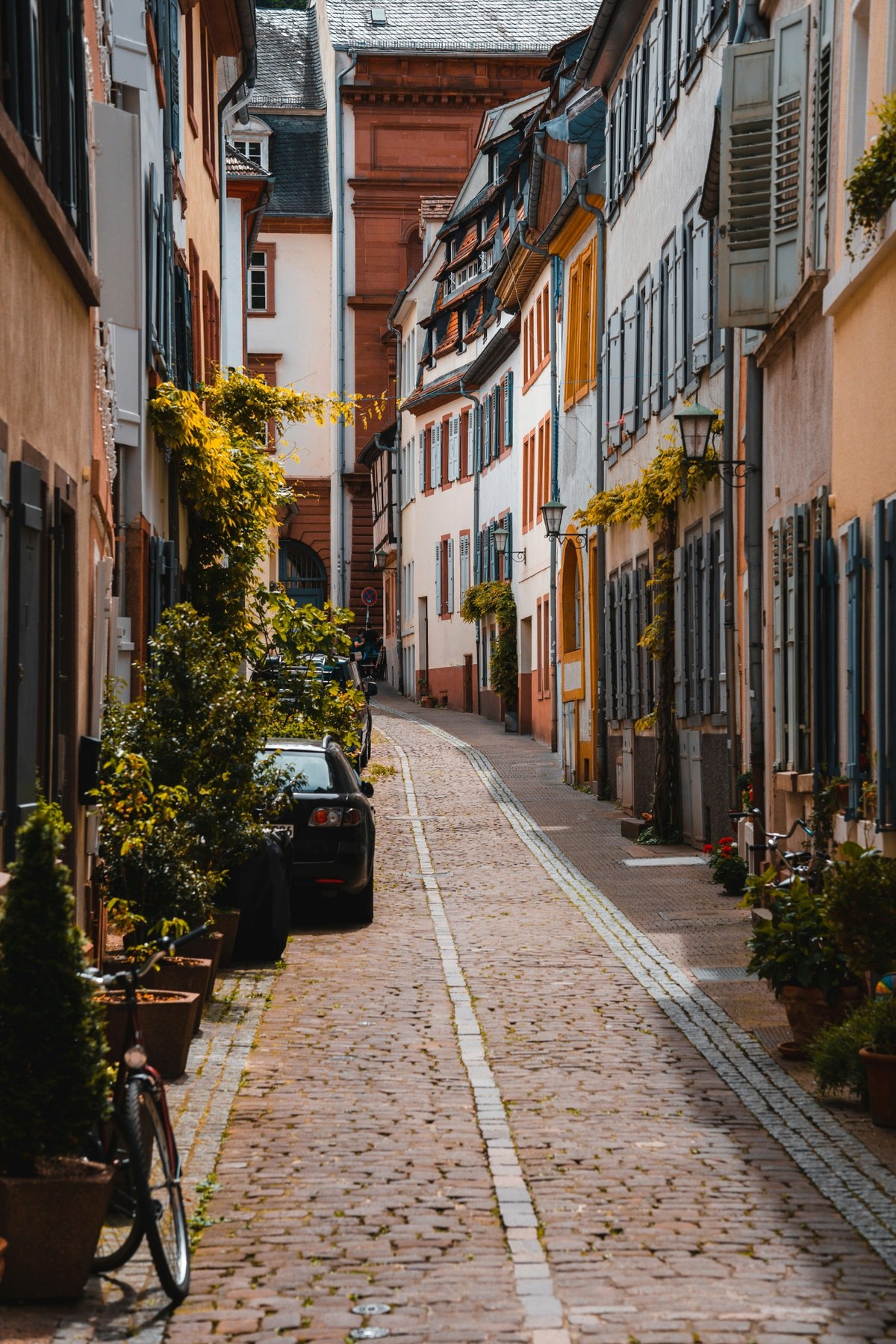
The city suffered catastrophic destruction in the late seventeenth century. What followed gave large parts of the Altstadt the Baroque character you see today. That makes the relationship with the castle unusually satisfying. Above you, destruction was allowed to remain visible. Below it, a functioning city had to be reconstructed. Walk through Marktplatz and along Hauptstraße with that contrast in mind. Don't ask whether the old town is “really old”. Ask which version of Heidelberg you're looking at.
The university in the city
Heidelberg University dates to 1386, but don't expect its historic identity to resolve itself into one grand campus.
It occupies the city. Around Universitätsplatz and the surrounding Altstadt, university buildings sit within streets that also contain houses, churches, shops and cafés.
The result is the opposite of a self-contained academic precinct. The university became one of Heidelberg's defining institutions without replacing the urban fabric around it. Walk from the Old University into the neighbouring streets and notice how quickly “university architecture” stops being a separate category. The institution is monumental historically. Spatially, it remains woven into the town.
Details to notice
The intact city is not necessarily the older one
Heidelberg plays a useful trick on the eye.
The broken castle looks ancient. The streets beneath it look preserved. But architectural survival isn't that simple.
Parts of the castle preserve medieval and Renaissance fabric precisely because the complex eventually stopped functioning as a residence and became a ruin. Much of the city below had to continue living after devastation and was rebuilt accordingly. Then there is Haus zum Ritter: a surviving Renaissance town house sitting among buildings that may look equally historic but belong to the reconstructed city. So don't use completeness as a shortcut for age. In Heidelberg, sometimes the ruin survived while the intact city had to begin again.
Look closer
Read the castle courtyard sideways
Most people look through the castle towards the view.
Turn ninety degrees. The courtyard puts buildings from different phases into direct conversation. Medieval residential ranges and elaborate Renaissance façades face one another because successive rulers kept adding to an existing residence.
Don't try to make the styles agree. Their disagreement is the evidence.
Haus zum Ritter survived the city around it
Opposite the Church of the Holy Spirit stands one of Heidelberg's most useful buildings.
The Haus zum Ritter St. Georg was built in 1592 for the cloth merchant Charles Bélier. Its richly worked Renaissance façade represents a type of gabled house once much more common in Heidelberg.
Then the city was devastated. The house was one of the few town houses to survive the destruction largely intact. Look at it not simply because it is ornate, but because it gives you a surviving fragment of the city that existed before the surrounding Baroque reconstruction. One façade becomes evidence for an absent streetscape.
Cross the Neckar before judging the skyline
Heidelberg's historic centre is compressed between river and hillside.
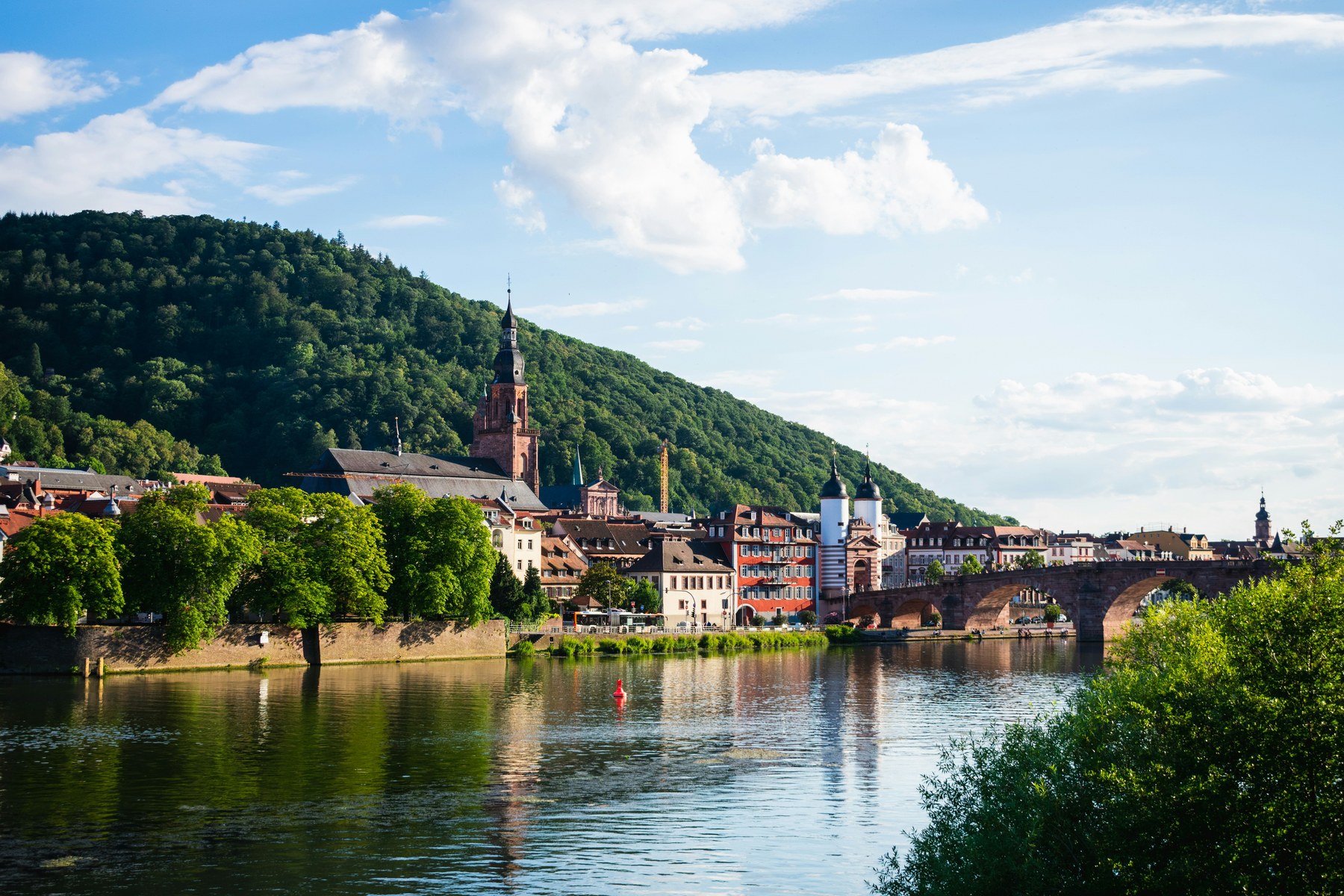
From inside it, the castle, church towers and dense roofs arrive separately. Cross the river and they finally organise themselves.
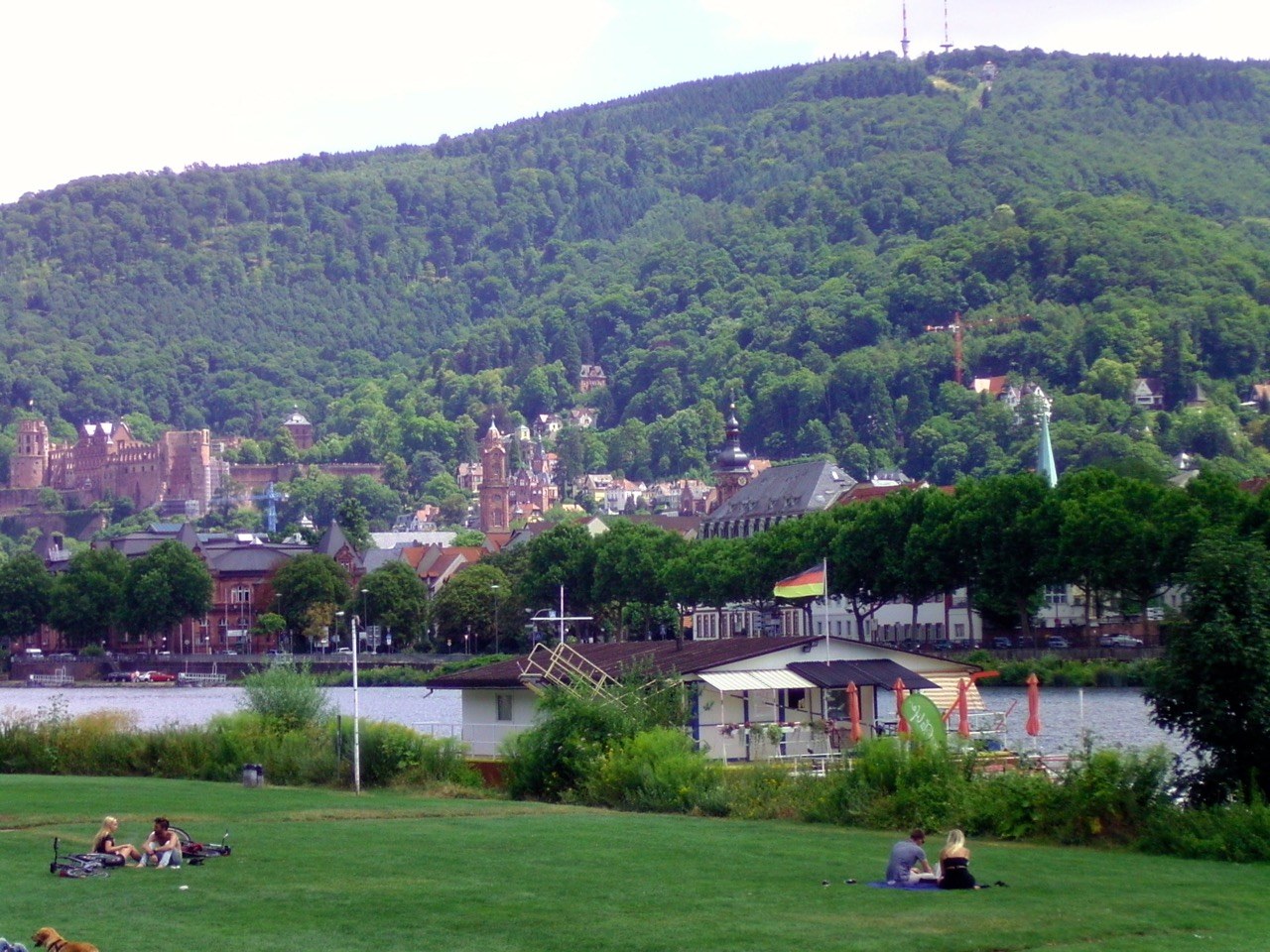
The castle occupies the wooded slope. The Church of the Holy Spirit rises from the Altstadt. The river and bridge establish the foreground. Distance turns individual monuments into a city.
A suggested walk
The ruin and the city it looks down on
Start at Heidelberg Castle.
Spend enough time in the courtyard to recognise that the ruin contains several architectural periods rather than one romantic object. Then look down from the terrace. Descend into the Altstadt and move through Kornmarkt towards Marktplatz. Pass the Church of the Holy Spirit and Haus zum Ritter, then continue along the streets around the historic university.
You are moving from visible destruction into visible reconstruction. Finish at the Old Bridge and cross the Neckar. Then turn around. From here, ruin and reconstructed city finally occupy the same view. The walk isn't about collecting Heidelberg's major sights. It's about watching ruin, reconstruction and survival change places.
Why Wendelse likes it
Heidelberg Castle
Give it a proper block of time — the courtyard, the terraces and the view — then walk back down rather than riding down. The descent is what connects the castle to the city beneath it.
The Old Bridge and the Neckar
Cross it, then turn around on the north bank. Castle, old town, bridge and river only sit in one view from over there.
Altstadt and the university quarter
Hauptstraße is the spine of the old town rather than an attraction in itself. The Student Prison is worth an hour if university history appeals to you.
The Philosopher's Walk
In good weather, move this up the list. It is where the whole setting — river, town, castle, wooded slopes — finally makes sense.
Church of the Holy Spirit and the Jesuit Church
Worth looking into if they fall naturally into your walk. Not every significant building here deserves equal time.
Baden and Palatinate food
One proper regional meal and a glass of local wine does more than a run of tourist menus. Studentenkuss is a local curiosity, not a pilgrimage, and white asparagus only matters if you happen to be here in season.
Birmingham · 6–9 November · 4 days
A suggested shape for your days.
Built around your dates and what you said you're in the mood for. The journey itself isn't checked until you choose dates in Results.
Friday · 6 November
Arrive & settle in
Arrival day
- Afternoon
- Arrive and check in.
- The Old Bridge and the north bank — Cross the Neckar and turn around: castle, old town, bridge and river in a single view.
Nothing else planned. That's deliberate.
Saturday · 7 November
Your big exploring day
Weekend
- Morning
- Heidelberg Castle — A proper block of time in the courtyard and on the terraces, then the walk back down into the old town.
- Altstadt and university quarter — Hauptstraße, Marktplatz and the university streets, with the Student Prison if that history appeals.
Keep the afternoon free — wander, sit somewhere, do nothing.
Sunday · 8 November
Take Heidelberg at your own pace
Weekend
- Afternoon
- The Philosopher's Walk — The climb on the far bank where the river, town, castle and wooded slopes finally sit together.
- Evening
- Baden and Palatinate evening — One proper regional meal with local wine, rather than a run of tourist menus.
Nothing else planned. That's deliberate.
Monday · 9 November
One last morning
Departure day
- Morning
- Breakfast, then a last walk through town.
- Afternoon
- Lunch, then the journey home.
Leave gaps between plans — nothing here needs rushing.
Prototype itinerary. Activity availability is illustrative, not live opening hours.
Getting there
Choose your dates and we'll check real flights and the journey from Birmingham.
Check a journey for your dates →Traveller fit
Is Heidelberg your kind of place?
- Food
- ★★★★☆4 out of 5
- History
- ★★★★★5 out of 5
- Architecture
- ★★★★★5 out of 5
- Walkability
- ★★★★★5 out of 5
- Outdoors
- ★★★★☆4 out of 5
- Atmosphere
- ★★★★★5 out of 5
Things worth doing
A first day that works
Castle in the morning, down into the old town, across the Old Bridge, and on towards the Philosopher's Walk if the weather holds. Leave the evening unscheduled.
If you have a second day
The university quarter and Student Prison if that history appeals, then the Neckar, and an evening built around regional food and wine.
Extra time
A longer walk, more river, more cafés and more wandering — rather than working down a list of minor monuments.
Wendelse tip
Cross the Old Bridge and turn around on the north bank.
Where to stay
Stay in or beside the Altstadt
Best for history and relaxed walking
The old town keeps the castle, university streets, river and restaurants within easy walking distance.
Ready to make it a trip?
Heidelberg
4 days · History · Architecture · Walkable · Outdoors · Culture
Prototype placeholders — nothing is connected to a booking service yet.