Tagliatelle al ragù
Flat egg-pasta ribbons with Bologna's slow-cooked meat sauce — the dish outsiders usually mean by 'spaghetti bolognese', which does not exist here.
The ragù is a slow-simmered sauce of minced beef (often with pork), soffritto, tomato and a little milk or wine, cooked for hours until thick enough to cling to the pasta rather than pool beneath it. It is served with fresh egg tagliatelle, never spaghetti — a distinction Bologna insists on.
It is the dish the city is most associated with abroad, and the one most often served wrong outside Italy.
A dense, clinging sauce rather than a thin tomato sauce with mince stirred through, and fresh rather than dried pasta.
Traditional trattorie throughout the historic centre.
Tortellini in brodo
Small pasta parcels filled with pork, prosciutto, mortadella and Parmesan, served in a clear meat broth.
The filling — pork loin, prosciutto, mortadella, Parmigiano-Reggiano and nutmeg — is wrapped in thin egg pasta and folded into its distinctive ring shape, said locally to be modelled on a woman's navel. It is served simply in capon or beef broth and is traditionally a dish for festive occasions, especially Christmas.
It shows Bologna's pasta tradition at its most restrained, in contrast to the richer ragù dishes.
A clear broth rather than a thickened one, and tortellini that are genuinely small.
Trattorie serving traditional Bolognese menus, especially in winter.
Mortadella Bologna
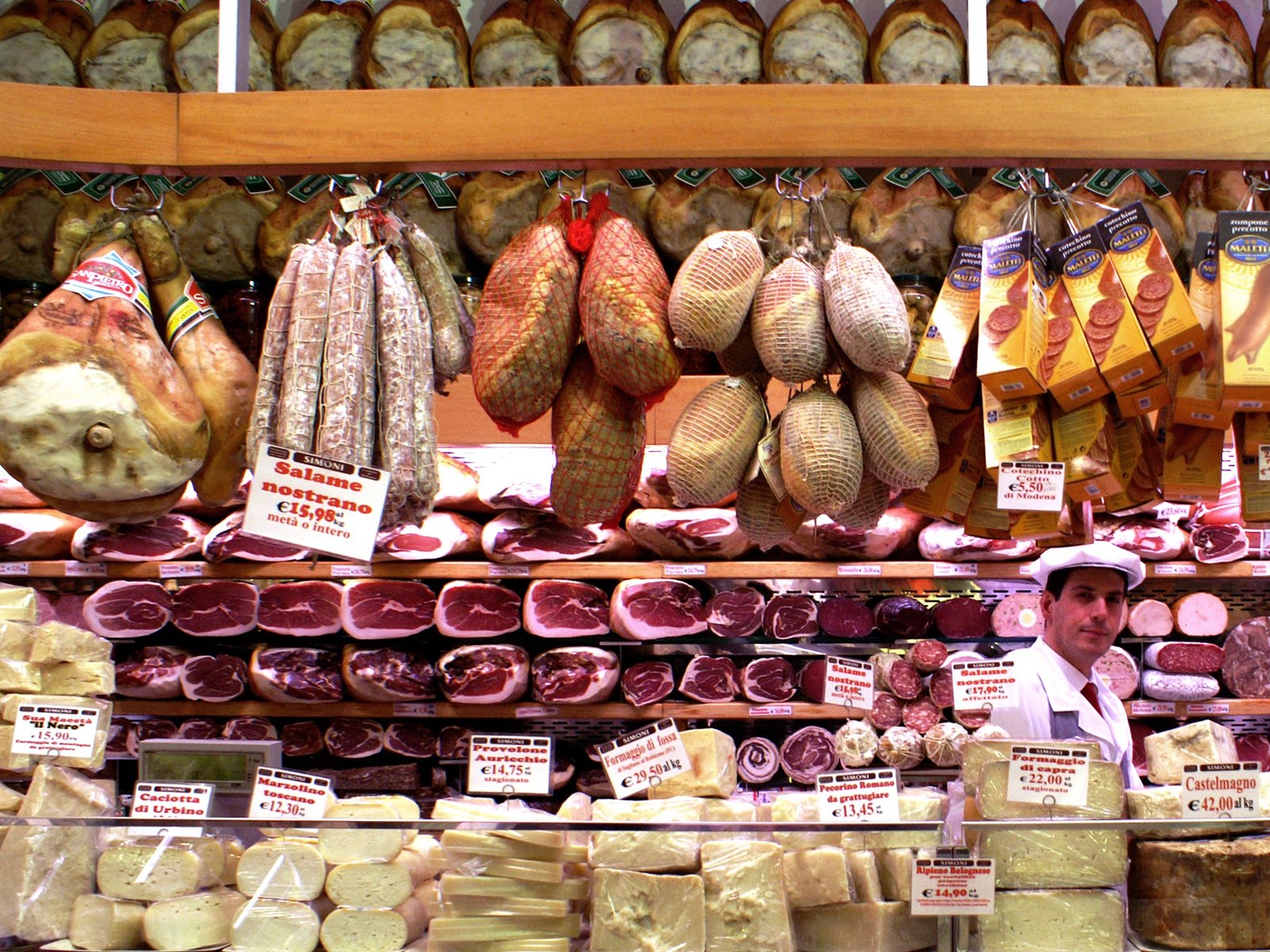
The city's namesake cured pork sausage, studded with cubes of pork fat and often pistachios.
Made from finely ground pork, cured and slow-cooked rather than smoked, mortadella is defined by its pale pink colour, visible cubes of fat and mild spicing. It carries PGI status as Mortadella Bologna, and the version made and sold locally is markedly different from the rubbery deli mortadella sold abroad.
It is Bologna's most exported product and its most commonly misunderstood one.
A soft, moist texture and visible fat cubes, sliced thin at a delicatessen counter rather than pre-packaged.
Delicatessens and market stalls in the Quadrilatero.
Lasagne verdi
Green, spinach-coloured pasta layered with ragù and béchamel, baked until the top turns golden.
The pasta sheets are coloured green with spinach worked into the dough, then layered with the same ragù used for tagliatelle and a béchamel sauce rather than ricotta, before being baked. It is heavier and more occasion-driven than the everyday tagliatelle version.
It shows ragù as a sauce with several traditional pasta applications, not a single fixed dish.
Green pasta sheets and béchamel showing through the layers, rather than tomato sauce.
Trattorie offering a full traditional menu rather than a quick-lunch format.
Crescentine with salumi
Small round flatbreads, fried or griddled, split and filled with local cured meats.
Crescentine — called tigelle further into the Apennines — are a bread dough cooked on a griddle or fried, then split and filled with mortadella, prosciutto or a lardo-based spread known as cunza. They make a lighter, more informal alternative to a sit-down pasta meal.
Casual osterie and some market stalls.
Pignoletto
A lightly sparkling white wine from the hills around Bologna, drunk young and cold.
Made from the Grechetto Gentile grape grown in the Colli Bolognesi, Pignoletto is usually vinified frizzante, with a fresh, slightly bitter finish that suits salumi and fried food rather than serious ageing.
It is the everyday local wine, standing in the role Lambrusco takes further west in Emilia.
By the glass with aperitivo or alongside a plate of mortadella.
Wine bars and osterie throughout the centre.
The Quadrilatero market streets
The knot of narrow streets east of Piazza Maggiore that has held Bologna's food shops and stalls for centuries.
Via Pescherie Vecchie, Via Drapperie and the surrounding lanes have functioned as Bologna's principal food market since the medieval period, with butchers, fishmongers, delicatessens and greengrocers still trading from the same narrow frontages. It is a working shopping street rather than a staged attraction, busiest in the late morning.
It shows where the ragù, mortadella and Parmigiano actually come from before they reach a restaurant table.
Shops trading by product rather than tourist gift stalls, with queues of local shoppers rather than menus in six languages.
Via Pescherie Vecchie and Via Drapperie, just east of Piazza Maggiore.